Why Your AC Freezes Up in Alabama Summer Heat | Fix It
Why does your AC freeze up in 95-degree Alabama heat? Learn the three most common causes of frozen evaporator coils and what Birmingham homeowners should do before calling.
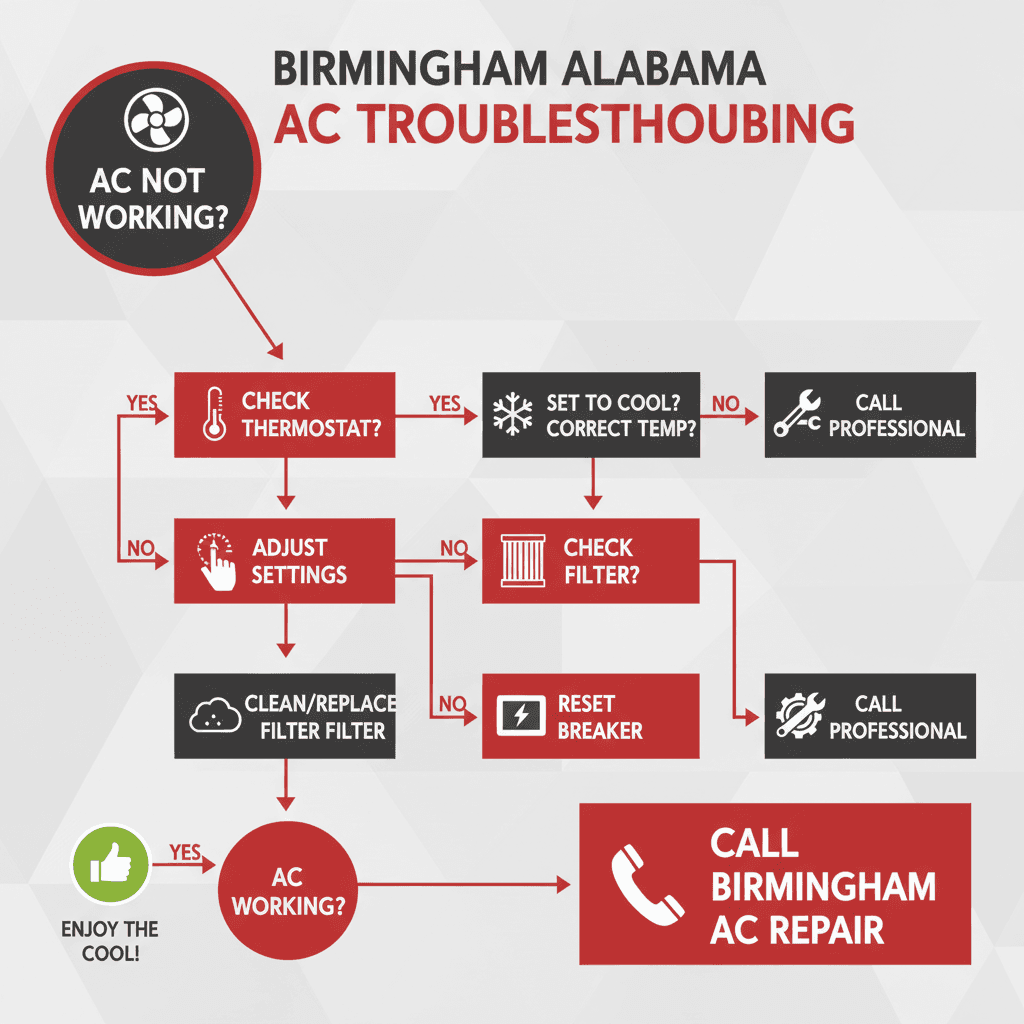
It seems like a contradiction. Your air conditioner is running during one of the hottest weeks of an Alabama summer, and ice is forming on it. How does ice form on anything when it is 98 degrees outside?
Quick Answer
AC systems freeze because the evaporator coil drops below 32 degrees when airflow is restricted (usually a dirty filter) or refrigerant is low (from a leak). If your AC has ice on it, turn the system off immediately, switch the fan to ON to speed thawing, and call a technician. Running a frozen AC can destroy the compressor.
The physics of it are real, and the causes behind it are problems that need to be fixed, not watched. A frozen AC in Birmingham summer heat is not just an inefficiency problem. Left running, a frozen system can damage the most expensive component in your entire HVAC system: the compressor. Here is what is actually happening and what you should do about it.

The Physics: Why Ice Forms
Your air conditioner's evaporator coil is designed to operate at temperatures between 32 and 55 degrees Fahrenheit under normal conditions. The coil contains refrigerant that absorbs heat from the air passing over it, cooling that air before it is distributed through your home.
When the coil works properly, warm room air passes over it continuously. That airflow keeps the coil surface above the freezing point of water. But when something disrupts that airflow — or when the refrigerant inside the coil gets too cold — the coil surface drops below 32 degrees and any moisture in the passing air freezes onto it.
Once ice starts forming, it insulates the coil surface and makes the problem worse. Ice is a better insulator than air, so the coil continues to drop in temperature, and the ice accumulates faster. Eventually the coil becomes a solid block of ice and the system cannot move air at all.
32°F
is the critical temperature — when the evaporator coil surface drops below freezing, moisture from indoor air begins accumulating as ice
Cause 1: Restricted Airflow
The most common cause of a frozen AC is restricted airflow over the evaporator coil. When not enough warm air passes over the coil, the refrigerant inside absorbs less heat, stays colder, and the coil surface drops below freezing.
Common airflow restrictions include:
- A dirty or severely clogged air filter (the most frequent culprit)
- Closed or blocked supply and return vents
- Collapsed or kinked flexible ductwork
- A failing or undersized blower motor
- Debris blocking the return air path
In Birmingham's pollen-heavy seasons, a filter can go from functional to severely restricted in a matter of weeks. Monthly filter checks during summer are essential.
Cause 2: Low Refrigerant Charge
If the refrigerant charge in your system is low — due to a leak — the pressure inside the evaporator coil drops below its normal range. Lower refrigerant pressure means lower refrigerant temperature, which means the coil gets colder than it should. This frequently pushes the coil surface below freezing even with adequate airflow.
| Cause of Freezing | How to Identify | Typical Fix |
|---|---|---|
| Dirty air filter | Filter visibly clogged, no light passes through | Replace filter, wait 2-3 hours for thaw |
| Low refrigerant (leak) | Ice on refrigerant lines, gradual cooling loss | Find and repair leak, recharge to spec |
| Failing blower motor | Weak airflow from vents, motor runs hot | Replace blower motor |
| Blocked vents | Multiple vents closed or furniture blocking returns | Open all vents, clear obstructions |
| Running in cold weather | System runs when outdoor temp below 60°F | Adjust thermostat programming |
Refrigerant leaks are a common cause of freezing in older Birmingham-area systems. Copper refrigerant lines and coil connections develop small cracks and leaks from years of thermal cycling and vibration. The leak may be slow, taking weeks or months to deplete the charge enough to cause freezing. But once icing begins, the system is operating in an abnormal state that accelerates refrigerant loss and increases stress on the compressor.
Key Takeaway
Adding refrigerant without finding and fixing the leak is a temporary solution that does not address the underlying problem. A reputable technician will locate and repair the leak, then recharge to manufacturer specification.
Cause 3: Running the System in Cold Weather
AC systems are not designed to operate when outdoor temperatures fall below about 60 degrees Fahrenheit. Running the AC during cool spring or fall nights — when outdoor temperatures drop into the 50s — can cause the system to freeze because the refrigerant pressures drop too low without the heat load from warm outdoor air.
This is less common as a standalone cause in Alabama summers, but it is relevant during the spring shoulder season when homeowners run the AC during warm afternoons and the overnight lows drop into the 50s. Programmable thermostat settings that do not account for cool nights can inadvertently run the AC when conditions cause freezing.
AC acting up? Do not wait until it dies completely.
Call (205) 206-5252What to Do When Your AC Has Frozen
If your AC is frozen, follow these steps in order:
- Turn the system OFF at the thermostat immediately
- Switch the fan to ON mode (not AUTO) to move room-temperature air over the coil and speed thawing
- Do NOT pour hot water on the coil — this can cause thermal shock damage
- Place towels under the air handler and around the drain pan to catch melt water
- Wait 2 to 4 hours for the ice to fully melt
- Check and replace the air filter if dirty
- Wait an additional hour after replacing the filter before restarting
- Monitor the system closely for the first hour after restart
If the system begins to freeze again after restart, or if cooling performance is still poor after thawing, call for professional service. Recurring freezing indicates a refrigerant problem, a mechanical airflow issue, or both — neither of which resolves on its own.
The Compressor Risk
We want to be direct about the risk of ignoring a freezing problem. The compressor circulates refrigerant through the entire system. When the evaporator coil is iced over, the refrigerant returning to the compressor is in an abnormal state — carrying liquid refrigerant that should have boiled off in the coil. Liquid refrigerant entering the compressor causes what technicians call liquid slugging, which hammers the compressor internals and can cause irreversible mechanical damage.
1
single severe icing event can damage a compressor that was otherwise healthy — do not gamble with repeated freeze-thaw cycles
A single severe icing event can damage a compressor that was otherwise healthy. Running a system through repeated freeze-thaw cycles over a summer accelerates compressor wear significantly. The compressor in a Birmingham residential system typically costs a substantial portion of total system value to replace — in many cases, a compressor failure in a system over 12 years old triggers a full replacement decision.
The arithmetic is straightforward. A service call to diagnose and fix a freezing problem costs a fraction of a compressor replacement. And a compressor replacement often costs as much as a new system. Addressing the freezing now is always the right financial decision.
Key Takeaway
Never ignore a freezing AC — every freeze-thaw cycle risks compressor damage. The cost to fix a freezing problem is a fraction of what a compressor replacement or new system will cost.
If your AC is freezing up, call Emergency AC Repair Service at (205) 206-5252. We serve all of Birmingham, Hoover, Pelham, Alabaster, Helena, and the surrounding area with professional diagnostics and quality workmanship.
Frequently Asked Questions
Why does my AC freeze up in 95-degree Birmingham heat?
AC freeze-ups in hot weather occur when the evaporator coil temperature drops below 32 degrees Fahrenheit due to restricted airflow, low refrigerant, or both. A dirty air filter, blocked return vents, or a failing blower motor reduces airflow across the coil. Low refrigerant from a leak causes the remaining refrigerant to expand more than designed, dropping coil temperature below freezing.
What should I do if my AC has ice on it in Birmingham?
Turn off the cooling at the thermostat immediately but leave the fan set to ON. This circulates warm air across the frozen coil to thaw it. Do not try to chip or scrape ice off the coil as this can damage the delicate aluminum fins. Allow 2 to 4 hours for complete thawing, then check and replace the air filter before restarting.
Can a dirty air filter cause my AC to freeze in Alabama?
Yes. A dirty air filter is the single most common cause of AC freeze-ups in Birmingham homes. When the filter restricts airflow, less warm air passes over the evaporator coil. Without sufficient heat absorption, the coil temperature drops below freezing and moisture from the air freezes on it. Check and replace your filter monthly during the Alabama cooling season from April through October.
Does low refrigerant cause AC freeze-ups?
Low refrigerant is the second most common cause of AC freeze-ups. When refrigerant levels drop below the specified charge due to a leak, the remaining refrigerant expands more than designed in the evaporator coil, causing the coil temperature to drop below freezing. Simply adding refrigerant without finding and fixing the leak is a temporary solution that will recur.
How often do AC systems freeze up in Birmingham Alabama?
AC freeze-ups are one of the most common service calls in Birmingham, particularly during peak summer months when systems run continuously and air filters clog faster due to higher pollen and dust circulation. Systems with deferred maintenance are especially vulnerable. Regular filter changes and annual tune-ups significantly reduce freeze-up risk.
Free Birmingham HVAC Homeowner Checklist
Download our seasonal maintenance checklist designed for Birmingham's climate. Covers spring prep, summer survival, fall tune-up, and winter protection — the same checklist our technicians use on service calls.
Call (205) 206-5252 to RequestSources & Citations
- U.S. Environmental Protection Agency — Indoor Air Quality
- U.S. Department of Energy — Heating & Cooling
- ASHRAE — American Society of Heating, Refrigerating and Air-Conditioning Engineers
- ENERGY STAR — Heating & Cooling Equipment
- Alabama General Contractor Licensing Board
- NATE — North American Technician Excellence Certification
Emergency AC Repair Service Editorial Team
Licensed HVAC Professionals • Birmingham, Alabama
Our content is written and reviewed by Alabama-licensed HVAC technicians with hands-on field experience servicing residential systems across Birmingham's east corridor. Every article reflects real-world diagnostic experience, manufacturer training, and EPA certification standards — not generic advice. We serve Leeds, Moody, Pinson, Clay, and Springville.
Related Resources
Need Emergency AC Repair in Birmingham?
Available 24/7 across the Birmingham metro area. Licensed and insured.
(205) 206-5252More Articles
Emergency AC Repair Cost in Birmingham AL (2026 Guide)
March 15, 2026 · 12 min read
7 Warning Signs Your AC Is About to Fail in Birmingham AL
March 8, 2026 · 12 min read
What to Do When Your AC Stops Working in Birmingham AL
February 28, 2026 · 14 min read
5 Signs Your AC Is About to Fail This Birmingham Summer
April 10, 2026 · 11 min read
Emergency AC Repair at Night for Birmingham AL Homeowners
April 10, 2026 · 10 min read
Central Air vs Mini Split: Best Choice for Birmingham AL
April 10, 2026 · 13 min read
AC Emergency? What to Do Before the HVAC Tech Arrives
April 5, 2026 · 8 min read
The Real Cost of Ignoring a Leaking AC in Birmingham AL
April 2, 2026 · 9 min read
AC Repair or Replacement: How to Decide in Birmingham AL
March 22, 2026 · 10 min read
Pelham vs Hoover: Different Homes, Different AC Problems
March 18, 2026 · 7 min read
AC Maintenance Myths That Cost You Money | Birmingham AL
March 12, 2026 · 9 min read