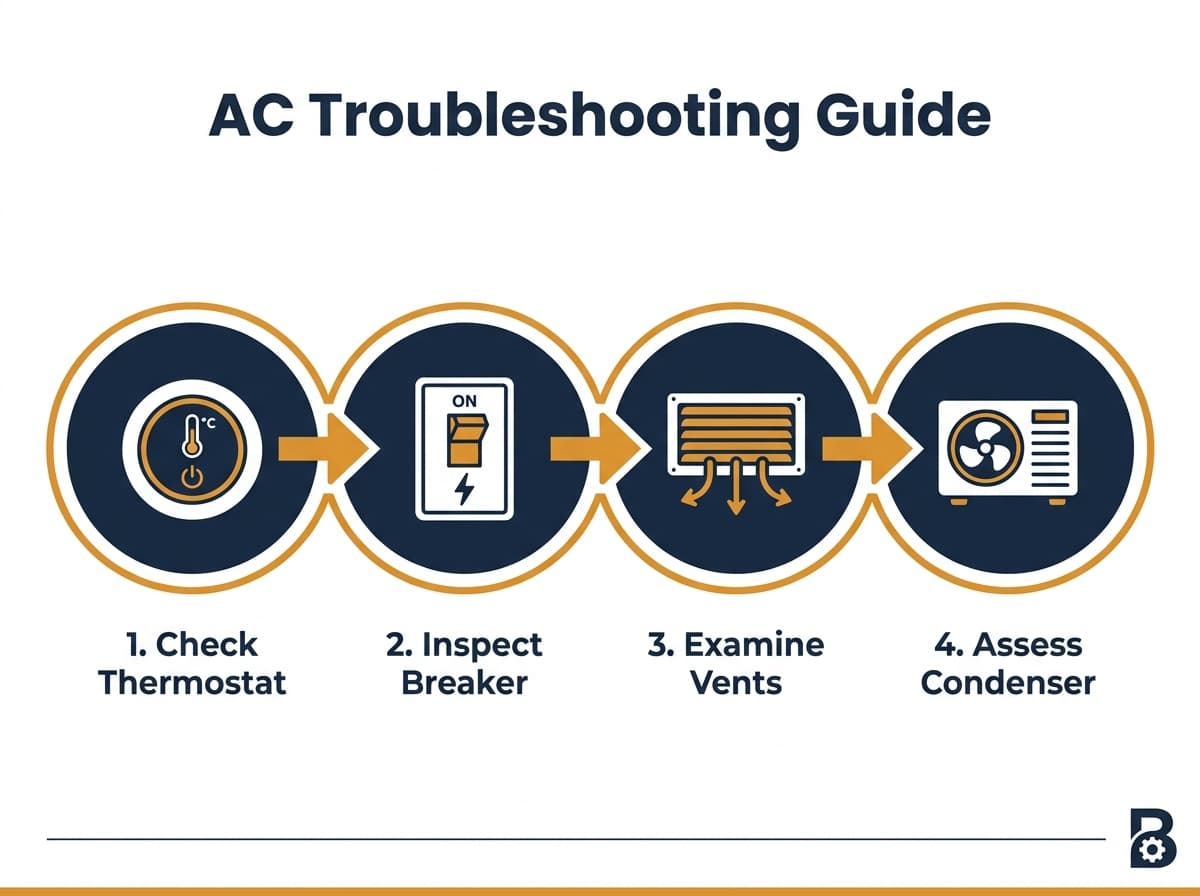
AC Repair or Replacement: How to Decide in Birmingham AL
AC repair or full replacement — how do Birmingham AL homeowners decide? The honest guide to what factors actually matter and how to avoid getting pushed the wrong direction.
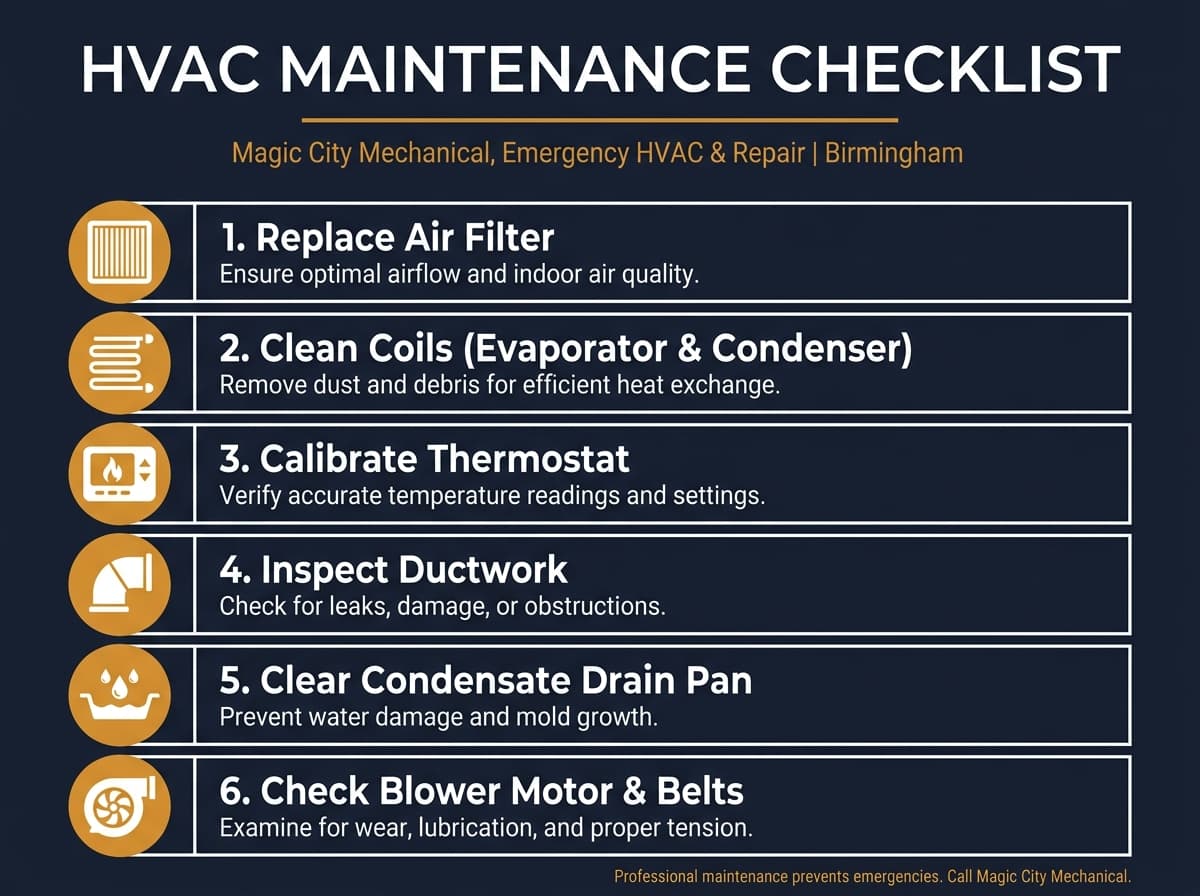
The repair-versus-replace decision is one of the most consequential choices a Birmingham homeowner makes about their home. It is also a decision that has significant financial implications for the HVAC company advising you, which means the guidance you receive is not always purely in your interest.
Quick Answer
Use this framework: multiply the system age by the repair cost. If the result exceeds 5,000, replacement deserves serious consideration. Also consider refrigerant type (R-22 systems are increasingly expensive to maintain), recent repair history, and whether you are seeing a pattern of recurring failures.
Some companies push replacement prematurely because the margin on a new system is substantially higher than a repair. Others will recommend repairs indefinitely on equipment that is genuinely beyond cost-effective service because they prefer the recurring revenue from service calls. Neither approach serves you.
This guide gives you the analytical framework to make this decision clearly, based on your actual situation rather than a technician's agenda.
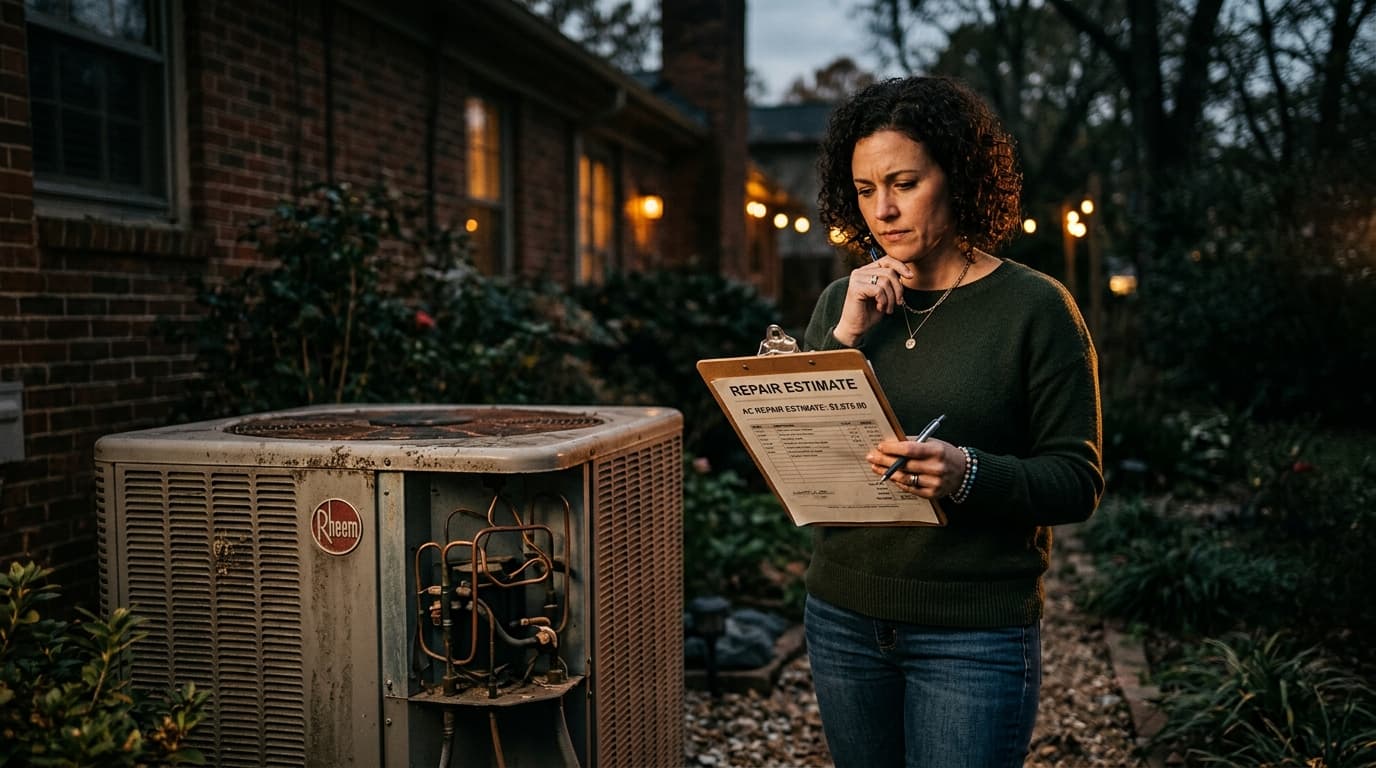
The Factors That Actually Matter
System Age
Age is the starting point of the analysis, not the end point. A system's age tells you where it is in its statistical life expectancy and what kind of failure it is experiencing in that context.
A residential central AC system has a realistic service life of 15 to 20 years in a moderate climate. In Birmingham, with its extreme cooling season, that expectation is reduced. Systems in our market that get 15 years of reliable service with proper maintenance are doing well. Systems at 12 years are mid-life. Systems at 18 or more years are statistically near end-of-life.
| System Age | Life Stage | Repair Philosophy |
|---|---|---|
| Under 8 years | Young system | Repair almost everything — good years ahead |
| 8-12 years | Mid-life | Repair most issues, evaluate major failures carefully |
| 12-15 years | Mature | Repair minor issues, seriously consider replacement for major failures |
| 15+ years | End of life | Only repair if the fix is minor and inexpensive |
| 18+ years | Past expected life | Replace — additional repairs are diminishing returns |
Age matters because it determines what a repair investment is buying you. A $600 repair on a 7-year-old system buys you many additional years of service from a system still in its prime. The same $600 repair on a 17-year-old system may buy you a season, or may trigger another failure from a different aging component before the year is out.
The Nature of the Failure
Not all failures are equal. Component-level failures — capacitors, contactors, fan motors, control boards, condensate systems — are the expected maintenance costs of HVAC ownership. These parts wear out, they are replaced, and the rest of the system continues operating reliably. Repairing these failures makes sense at virtually any system age unless multiple are failing simultaneously.
Major component failures are different. Compressor failure is the most common major failure that triggers a replacement conversation. The compressor is the heart of the cooling system, and its replacement is expensive. On a younger system with good remaining value, compressor replacement can make financial sense. On an older system, the compressor cost relative to total system value often tips the math toward replacement.
Key Takeaway
Component-level failures (capacitors, contactors, fan motors) are normal maintenance costs that make sense to repair at almost any system age. Major failures (compressor, coil) require a more careful cost-benefit analysis based on system age and condition.
Refrigerant Type
This factor is often decisive in older systems. If your system was manufactured before 2010, there is a meaningful chance it uses R-22 refrigerant (also called Freon). R-22 production was phased out in the United States in 2020, and the remaining supply is being depleted. Prices for R-22 have risen dramatically and will continue to rise.
If your R-22 system has a significant refrigerant leak that requires substantial recharge, the refrigerant cost alone may justify replacing the system with a modern R-410A unit, even if the rest of the equipment is still functional. Ask your technician what refrigerant your system uses before making any major repair decision.
AC acting up? Do not wait until it dies completely.
Call (205) 206-5252Repair Cost as a Percentage of Replacement Cost
A common rule of thumb in the HVAC industry is the 50 percent rule: if the repair cost exceeds 50 percent of the cost of a replacement system, replacement deserves serious consideration. This is a reasonable starting point but should be adjusted for age.
We use a modified version: multiply the system age by the repair cost. If that number exceeds 5,000, replacement is worth considering:
| System Age | Repair Cost | Age x Cost | Recommendation |
|---|---|---|---|
| 7 years | $600 | $4,200 | Repair — well under threshold |
| 8 years | $600 | $4,800 | Borderline — probably repair |
| 10 years | $600 | $6,000 | Consider replacement |
| 12 years | $500 | $6,000 | Consider replacement |
| 15 years | $400 | $6,000 | Lean toward replacement |
| 7 years | $800 | $5,600 | Consider replacement despite young age |
This formula is a decision support tool, not a rigid rule. It gives you a consistent framework to evaluate the specific numbers you are dealing with.
Recent Repair History
A system that has required two or three significant repairs in the past two years is demonstrating an aging failure pattern. When one component fails, it often indicates that adjacent components are under similar stress.
If your system has been generating regular repair bills, track those costs and add them to your ongoing calculation. A system that has cost $1,500 in repairs over two years and now needs another $700 repair is actually a $2,200 decision, not a $700 one.
$5,000
Age multiplied by repair cost — if this number exceeds 5,000, replacement deserves serious consideration
Signals That Point Clearly to Replacement
Certain situations move the needle decisively toward replacement regardless of how you feel about the repair-versus-replace analysis:
- A failed compressor in a system over 12 years old using R-22 refrigerant
- Multiple simultaneous major component failures
- A system requiring emergency repairs every cooling season
- Chronic inability to maintain comfortable temperature despite repairs
- Energy bills consistently climbing despite service
Signals That Point Clearly to Repair
- A system under 10 years old with a component-level failure (capacitor, contactor, fan motor)
- A system of any age with a single component failure and no other signs of deterioration
- Normal energy bills, adequate cooling capacity, no refrigerant issues
- First significant repair on a well-maintained system
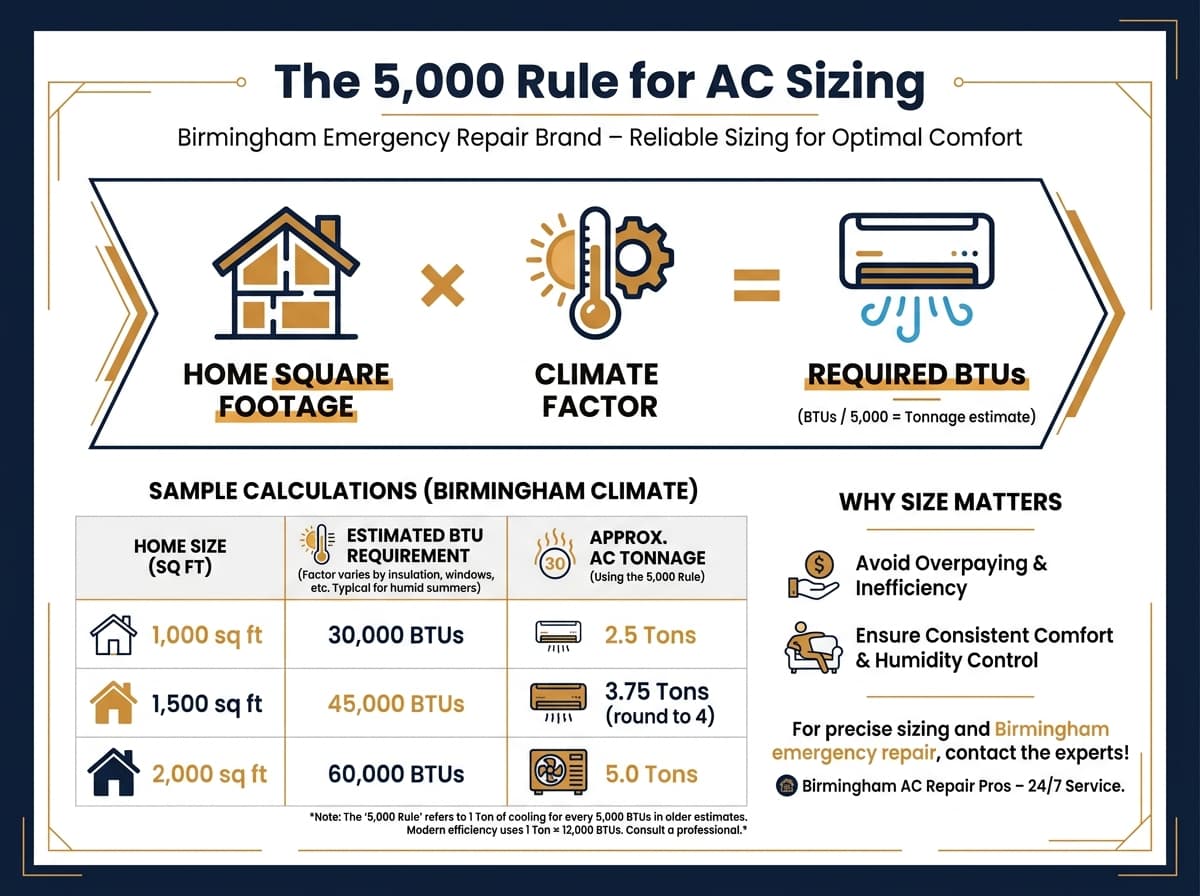
Get an Honest Second Opinion on Major Decisions
For any repair recommendation over a few hundred dollars, and especially for any replacement recommendation, getting a second opinion is reasonable and a reputable company will not object to it. If a company objects to a second opinion, that tells you something important.
A legitimate repair-versus-replace discussion includes specific numbers:
- Exact repair cost with written estimate
- Current system age and condition assessment
- Estimated remaining service life if repaired
- Replacement cost with specific equipment options
- Efficiency comparison between current system and replacement
Key Takeaway
Vague statements like "this system is old and you should replace it" without specific supporting data are not a professional recommendation. Demand numbers, not opinions.
At Emergency AC Repair Service, we provide written diagnostics and written repair estimates before any work begins. Our technicians discuss the repair-versus-replace question openly, including situations where we believe replacement is the better long-term investment. We do not pressure decisions in either direction. Call (205) 206-5252 for a professional evaluation of your system.
Frequently Asked Questions
When should I replace my AC instead of repairing it in Birmingham?
Consider replacement when your system is over 12 years old, uses R-22 refrigerant which is no longer manufactured, requires a repair costing more than 50 percent of a new system, or has needed multiple repairs in the past two years. Birmingham climate accelerates system aging, so a 12-year-old system here has endured the equivalent of 15 or more years in a milder climate.
What is the 5000 dollar rule for AC repair versus replacement?
Multiply the age of your system in years by the estimated repair cost in dollars. If the result exceeds 5000, replacement is generally the better financial decision. For example, a 10-year-old system needing a repair over 500 dollars crosses the threshold. This formula accounts for the diminishing return on investing in aging equipment.
How long do AC systems last in Birmingham Alabama climate?
AC systems in Birmingham typically last 10 to 15 years compared to 15 to 20 years in milder climates. The extended cooling season running from April through October, temperatures regularly exceeding 95 degrees, and persistent high humidity force systems to run at or near maximum capacity for five to six continuous months each year, significantly accelerating component wear.
Will a new AC system lower my energy bills in Birmingham?
Replacing an older system with a modern high-efficiency unit can reduce cooling costs substantially. A system manufactured before 2006 with a 10 SEER rating replaced by a 16 SEER system uses roughly 40 percent less energy for the same cooling output. In Birmingham where AC accounts for 50 to 60 percent of summer electricity bills, those savings are significant.
Should I get multiple quotes before replacing my AC in Birmingham?
Yes. Get at least three written estimates from licensed Alabama HVAC contractors before committing to a system replacement. Compare not just the price but the equipment brand and model, SEER rating, warranty terms, and what is included in the installation. A thorough contractor will perform a Manual J load calculation to properly size the system for your home.
Free Birmingham HVAC Homeowner Checklist
Download our seasonal maintenance checklist designed for Birmingham's climate. Covers spring prep, summer survival, fall tune-up, and winter protection — the same checklist our technicians use on service calls.
Call (205) 206-5252 to RequestSources & Citations
- U.S. Environmental Protection Agency — Indoor Air Quality
- U.S. Department of Energy — Heating & Cooling
- ASHRAE — American Society of Heating, Refrigerating and Air-Conditioning Engineers
- ENERGY STAR — Heating & Cooling Equipment
- Alabama General Contractor Licensing Board
- U.S. EPA — Section 608 Technician Certification
Emergency AC Repair Service Editorial Team
Licensed HVAC Professionals • Birmingham, Alabama
Our content is written and reviewed by an Alabama-licensed, EPA Section 608–certified editorial team focused on residential AC and cooling systems. This piece was reviewed against the day-to-day residential cooling work our technicians do across Birmingham’s east corridor — real diagnostic calls, manufacturer training, and current Alabama HVAC code rather than generic advice.
Related Resources
Need Emergency AC Repair in Birmingham?
Available 24/7 across the Birmingham metro area. Licensed and insured.
(205) 206-5252Read Next