Homes Without Ductwork
Historic downtown Leeds, Springville, and Birmingham homes that predate central AC. Adding ducts means tearing out ceilings. A ductless head preserves the building.
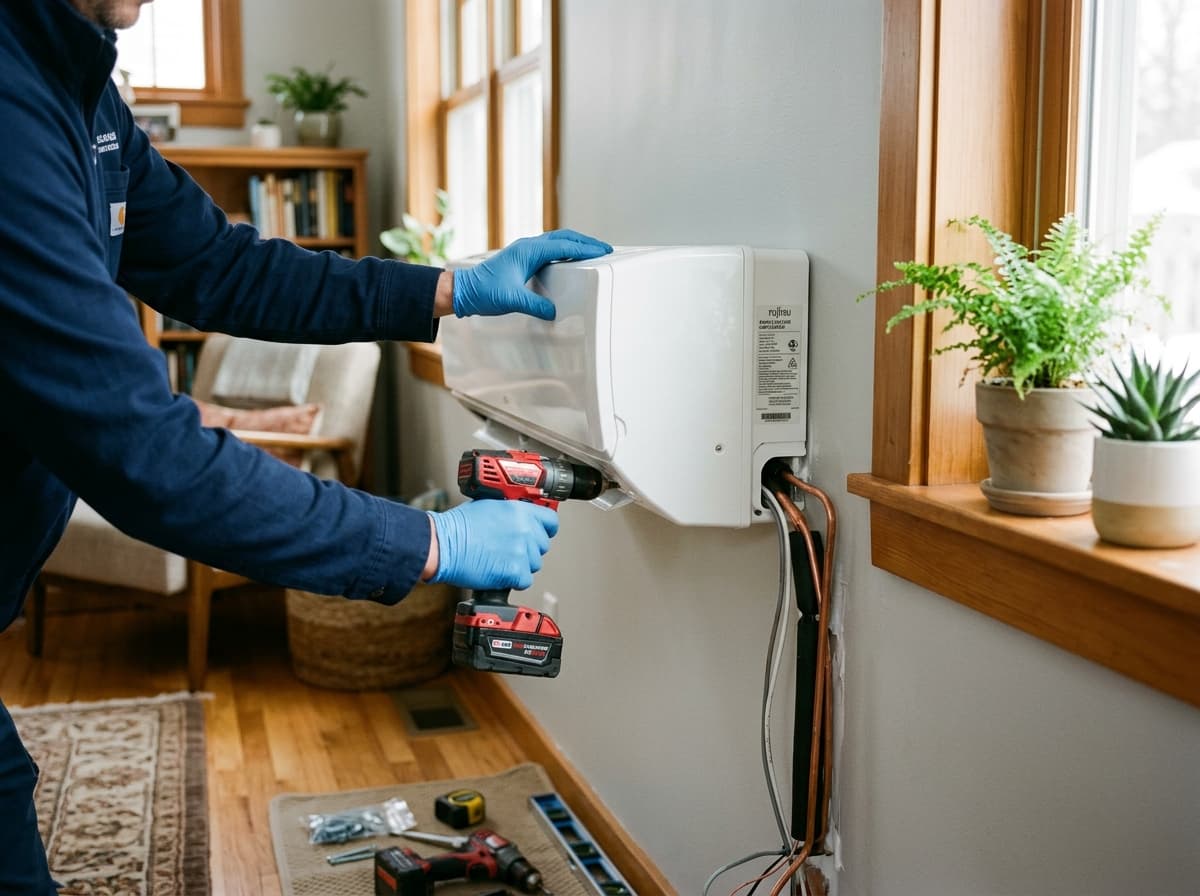
Ductless mini split AC repair services, ductless mini split repair, ductless mini split air conditioner repair, ductless mini split AC installation services — mini split repair Leeds, mini split installation Leeds, mini split repair springville, and across Birmingham's east corridor. Garages, workshops, historic homes, bonus rooms, additions, and multi-zone residential. Mitsubishi, Daikin, Fujitsu, LG. Written estimate before any wrench turns.
Alabama Licensed · EPA Section 608 · Fully Insured
A licensed technician calls you. No call center, no quote bots.
Leeds · Moody · Pinson · Clay · Springville
East Corridor · Leeds to Springville
Trane · Carrier · Lennox · Rheem · Goodman · York · Daikin · Mitsubishi · Fujitsu · Bryant · American Standard · Amana
365 days a year
A ductless mini-split cools and heats a space without using ductwork. An outdoor condenser connects to one or more indoor air-handling heads through a small refrigerant line set that runs through a 3-inch wall penetration. Each indoor head cools the room it is mounted in directly, which eliminates the 20 to 30 percent efficiency loss that typical duct systems have, and allows independent temperature control for every room that has a head.
For Birmingham homes that lack ductwork, historic homes where adding ducts means destroying plaster walls and ceilings, detached garages and workshops that need dedicated cooling, and bonus rooms that were never tied into the main HVAC zoning properly, a ductless mini-split is almost always the right long-term solution.
Modern ductless mini-splits use variable-speed inverter compressors that modulate output based on the actual cooling load rather than cycling on and off at full capacity. This produces efficiency ratings of 18 to 24 SEER on higher-end models, compared with 14 to 16 SEER for most builder-grade central AC installations. In Alabama summer heat where systems run 15 to 18 hours per day during July and August, the efficiency difference adds up to meaningful monthly utility savings.
Historic downtown Leeds, Springville, and Birmingham homes that predate central AC. Adding ducts means tearing out ceilings. A ductless head preserves the building.
Detached garages, shop outbuildings, and pole barns across the east corridor. Window units die every few summers. A properly sized mini-split runs quietly for 15+ years.
Finished bonus rooms in Moody, Clay, and Pinson new-construction homes that never zoned into the main HVAC properly. A single head fixes the temperature gap permanently.
Room additions and sunrooms on Leeds and Pinson rural properties where extending the existing duct system is impractical or undersized.
Two-story Clay and Moody homes where running the whole house to cool one bedroom at night wastes energy. Per-room zoning slashes utility costs.
Leeds tourism rentals and commercial spaces where independent temperature control per unit is needed and central zoning is not practical.
Cooling a Birmingham garage or workshop is one of the most common ductless applications we install across the east corridor. Detached garages share the same core problem: high solar gain through uninsulated walls, metal doors that conduct heat, and no duct connection to the main HVAC. Window units die within a few summers. A properly sized mini-split solves the problem permanently. For the full playbook, read our garage mini-split guide.
Add 10–20% capacity for uninsulated garages, metal roofs, or significant south-facing exposure common in Alabama. Sizing ranges per Energy.gov and HomeGuide 2024 averages.
Phone rings on a technician's truck, not a call center. We ask three questions: address, make/model if you know it, what you're seeing. If we can't reach you quickly, we say so.
Every system gets a full diagnostic. Capacitors tested, refrigerant pressure checked, airflow measured. We explain the failure in plain English and write an estimate before you authorize anything.
Commonly-needed parts ride on every truck. Most repairs finish the same visit. Work is documented with photos, a written invoice, and manufacturer warranty details on any installed parts.
Most widely installed in Alabama. Strong parts availability. M-Series + MUZ-FH.
Industry volume leader. Excellent inverter technology. Quaternity + Emura.
Quiet operation. Strong multi-zone performance. Halcyon line.
Competitive pricing. Good mid-tier option. Art Cool series.
Brand names referenced for identification only. We are an independent contractor and not affiliated with or endorsed by any manufacturer.
For most Birmingham-area homes built after 1990 with existing ductwork in good condition, central AC remains the right primary system. It conditions the whole house from a single thermostat, the equipment is familiar to every HVAC contractor in Alabama, and replacement parts are universally stocked. Where central AC fails is in the edges: the garage that was never ducted, the historic 1920s bungalow in Leeds or Springville with plaster walls where adding ducts means tearing out ceilings, the bonus room over the garage that the original duct layout never reached, and the sunroom addition where extending the trunk duct would undersupply every other room.
Ductless wins those edge cases decisively. A single 12,000 BTU head unit conditions one zone independently, draws no air through duct losses, and delivers 18–24 SEER efficiency compared to the 14–16 SEER of most builder-grade central systems. According to the U.S. Department of Energy, duct losses in a typical home account for 20–30% of cooling energy — losses that ductless systems eliminate entirely. For east-corridor homes where a detached garage, workshop, or historic wing needs cooling, a ductless head is almost always the faster, cheaper, and more efficient solution than trying to extend an existing duct system that was not designed for the space.
The practical decision framework: if you have existing ducts that are in good condition and reach the space you want to cool, service or replace the central system. If the space has no ducts, if extending the ducts would require destructive work, or if the space is a garage or outbuilding, specify ductless. Multi-zone ductless is also worth evaluating for two-story homes where the upstairs runs 8–12°F warmer than the thermostat setpoint — per-room heads eliminate that gap permanently without the complexity and cost of a zoned central system.
| Situation | Central AC | Ductless |
|---|---|---|
| Whole house, existing ducts in good shape | Best choice | Not needed |
| Garage / detached workshop | Not practical | Best choice |
| Historic home, no ductwork | Destructive install | Best choice |
| Bonus room / sunroom addition | Often undersized | Best choice |
| Two-story temp imbalance | Complex zoning needed | Per-room heads fix it |
| Short-term rental unit | Shared system risk | Independent control |
Source: U.S. Department of Energy — Ductless Mini-Split Air Conditioners. Efficiency claims based on Energy.gov published benchmarks.
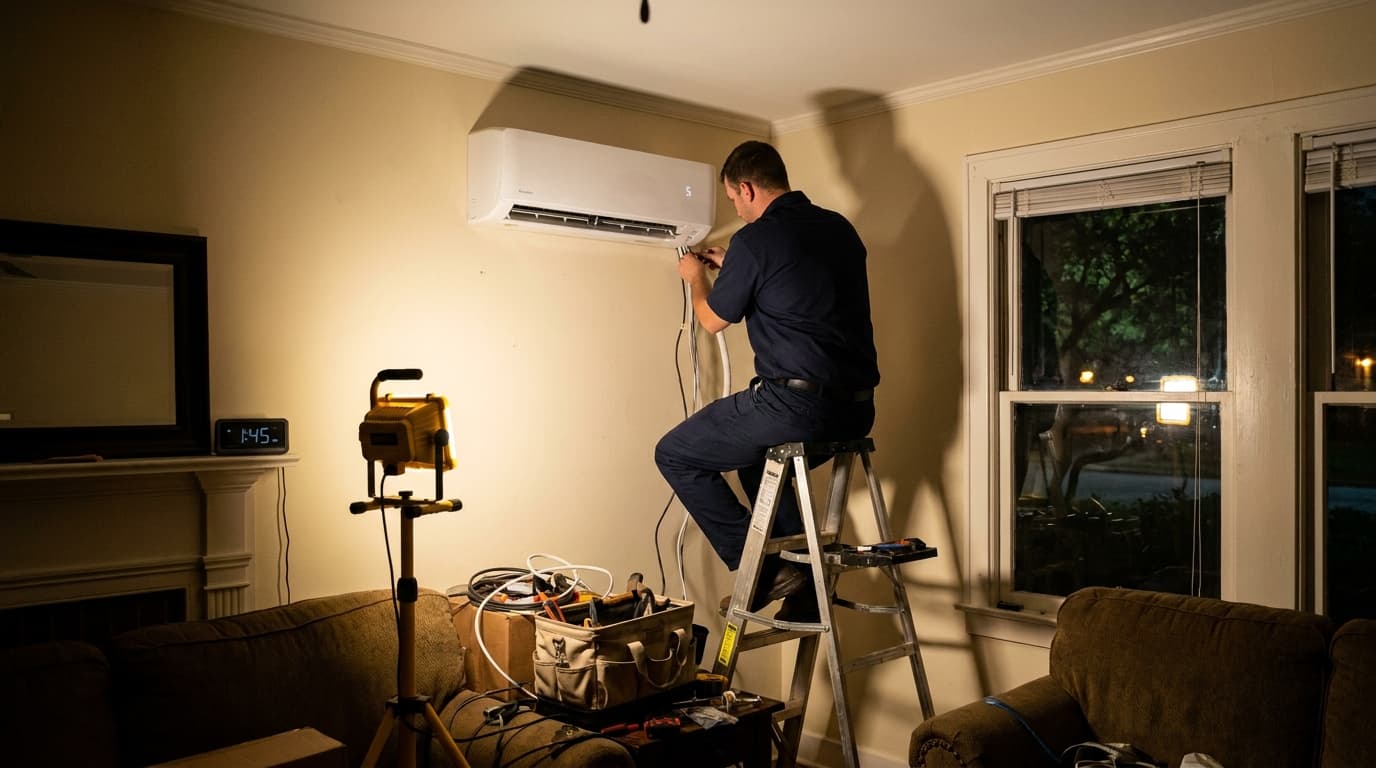
When you dial (205) 206-5252, the phone rings on a truck, not in a call room. The person who answers is the same technician who will diagnose your system. That changes every conversation. No handoffs. No "I'll have someone look into it." No ticket numbers.
“If I can't explain what's wrong with your AC in terms a homeowner understands, I haven't diagnosed it properly yet.”
The work is performed by John M. King, an Alabama-licensed HVAC contractor (AL Contractor License #2020068), EPA Section 608 certified for refrigerant handling. He has worked on every major brand in the Birmingham market — Trane, Carrier, Lennox, Goodman, Rheem, York, Daikin, Mitsubishi, Fujitsu. The commonly replaced parts ride on the truck. Most emergency repairs finish on the first visit.
The business was built small on purpose. A tight east-corridor territory. Three services. Licensed human being on every job. When homeowners ask what makes us different, the answer is usually boring: we just show up, we do the work, we tell you what it cost in writing before we start.
A practical 8-page PDF. Sizing, single vs multi-zone, brand comparison, install cost factors, humidity control, efficiency, and the questions to ask a contractor before signing. No sales pitch, no email list.
A ductless mini-split is a cooling and heating system that uses an outdoor condenser connected by a small refrigerant line set to one or more indoor air-handling heads mounted on walls or ceilings. Unlike central AC, there is no ductwork. Each indoor head cools the space it is mounted in directly, which eliminates duct losses and allows independent temperature control in every room that has a head. For Birmingham homes without ductwork, historic homes where duct installation is destructive, garages and workshop outbuildings, and bonus rooms that never heated or cooled properly, a ductless mini-split is usually the right answer.
Industry ranges for a single-zone ductless installation typically run $3,000–$6,000 and multi-zone systems $5,000–$15,000+ depending on head units, BTU capacity, line-set complexity, and electrical work (Energy.gov, HomeGuide 2024 averages). We give a written estimate before any work begins on your specific room, power supply, and unit selection. We do not publish our prices online because the real cost depends on your space.
Yes, and garage mini-split installation is one of our specialties. A typical 2-car garage of 400 to 576 square feet uses a 12,000 BTU single-zone unit. Larger shop buildings up to 800 square feet use 18,000 BTU units. We handle the electrical circuit, the refrigerant line set, the condensate drain, and the indoor and outdoor unit mounting.
Mitsubishi, Daikin, Fujitsu, and LG all make excellent ductless mini-split systems. Mitsubishi and Daikin are the two most widely installed brands in the Birmingham market and have strong parts availability. All four brands offer 18 to 24 SEER models that handle Alabama summer heat efficiently. The right brand for your install depends on budget, the specific model features you want, and availability at the time of install.
Yes. All modern ductless mini-splits are heat pumps that provide both cooling and heating. For Alabama winters, which rarely drop below the teens, a ductless mini-split provides efficient heating down to 5 degrees Fahrenheit on higher-end models. This makes a ductless mini-split a complete year-round HVAC solution rather than just a summer cooling option.
A single-zone installation typically takes half a day to a full day. Multi-zone installations with two or three indoor heads take one to two full days. We handle the entire installation in-house including electrical work, refrigerant line set running, condensate management, wall penetrations, and startup. All work is done under permit where required by local jurisdiction.
Yes, and historic home installations are one of our specialties. Ductless mini-split installation requires only 3-inch wall penetrations for the line set rather than destructive duct chases through ceilings and walls. We work with historic plaster walls, original trim, and architectural details carefully and leave the home in the same visual condition we found it.
National benchmarks from HomeGuide and the U.S. Department of Energy put single-zone ductless mini-split installation in the $2,000–$5,500 range for a typical residential install, with DOE citing a $3,000–$5,000 midpoint. Multi-zone systems with two or more indoor heads run $5,000–$15,000+ depending on the number of zones, BTU capacity, line-set routing, and electrical work required. We provide a written estimate on-site before any work begins. We do not publish our prices online because the real cost depends on your specific space, power supply, and unit selection.
The main disadvantages of ductless mini-splits are: higher upfront cost compared to window units (though the 15–20 year service life offsets this over time), visible indoor head units that some homeowners prefer not to see, each zone requiring its own head unit so whole-home coverage requires multiple heads, and regular filter cleaning every 1–3 months. Some homeowners also find the indoor head aesthetics less appealing than a ceiling register. For garages, workshops, or rooms without ductwork, these trade-offs are almost always worth it.
Ductless mini-splits eliminate one major allergen pathway: dirty ducts. Central AC systems can accumulate mold, dust, and biological matter in ductwork over years, and blow those particles into living spaces every time the system runs. A ductless system has no ducts. Each indoor head has a washable filter that is easy to clean every 1–3 months. For allergy sufferers, this is a meaningful advantage. That said, a ductless system is not a standalone air purifier — pairing it with a standalone HEPA filter in the room provides the best air quality outcome.
Dial now and a technician picks up — or leave your name and we'll call back the moment we're off the current job.