Emergency AC Repair at Night for Birmingham AL Homeowners
Your AC fails at 11 PM on a July night in Birmingham AL. This guide covers nighttime AC emergencies, what to check before calling, and how to keep your family safe.
It is 11 PM on a Tuesday in July. You are getting ready for bed when you realize the house feels warm. You check the thermostat and it reads 82 degrees, even though it is set to 74. The AC is running, but the air from the vents is not cold. Or maybe the system has stopped entirely and the house is silent except for the ceiling fans pushing warm air around. This scenario plays out in Birmingham homes every single night during the summer months. Your air conditioning system does not check the clock before it fails, and some of the most common component failures happen during the evening hours when the system has been running at maximum capacity all day.
Quick Answer
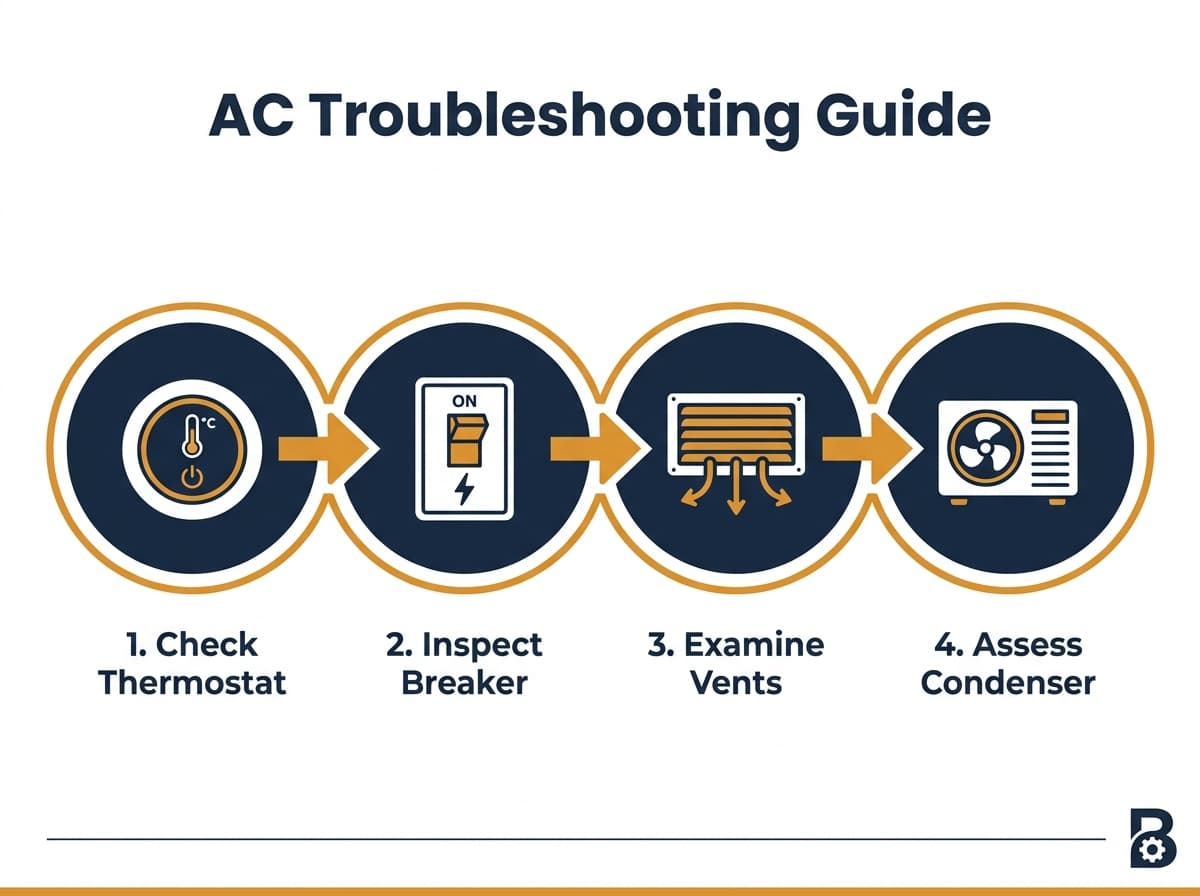
If your AC fails at night in Birmingham: check the thermostat, check the breakers, and check the air filter. If those three steps do not restore cooling, call (205) 206-5252. Most common nighttime failures — capacitors, contactors, and fan motors — can be repaired the same night by a prepared technician.
Knowing what to do during a nighttime AC emergency in Birmingham can make the difference between a miserable, sleepless night and a manageable situation. Here is what every Birmingham homeowner should know about dealing with an AC failure after dark.
Why AC Systems Often Fail at Night in Birmingham
It may seem like bad luck that your AC chose to break down at the worst possible time, but there is actually a logical reason why evening and nighttime failures are so common in Birmingham during the summer months.
During a typical July day in Birmingham, the outdoor temperature climbs into the mid-90s by early afternoon. Your AC system has been running at or near full capacity since late morning, and the compressor, fan motors, capacitors, and contactors have been under maximum electrical and thermal stress for 10 to 12 continuous hours by the time evening arrives.
| Component | Why It Fails at Night | How Common |
|---|---|---|
| Capacitor | Heat degrades it all day, fails during evening cycle | Most common nighttime call |
| Compressor | Overheats after 10-12 hours of continuous run | Common in aging systems |
| Contactor | Burns through contact points after hundreds of daily cycles | Common |
| Fan Motor | Bearings overheat after sustained operation | Moderate |
Capacitors are particularly vulnerable to end-of-day failure. These electrical components store and release energy to start and run the compressor and fan motors. Heat degrades capacitors over time, and a capacitor that has been absorbing heat all day may finally fail during an evening cooling cycle when it simply cannot deliver the electrical charge needed to keep the compressor running. This is the single most common emergency call we receive during Birmingham summers, and the majority of these calls come between 7 PM and midnight.
Compressor overheating is another common evening failure. The compressor works hardest during peak afternoon heat, and if it is beginning to fail or if refrigerant levels are low, the internal temperature of the compressor can reach critical levels by early evening. The thermal overload protection trips, shutting down the compressor to prevent catastrophic damage. You might hear the outdoor unit stop, restart, run for a few minutes, and stop again as the overload cycles.
7 PM - Midnight
is when the majority of emergency AC calls come in during Birmingham summers
What to Check Before You Call for Emergency Service
Before you pick up the phone for emergency service, there are several things you can safely check yourself that might resolve the problem or at least help the technician diagnose the issue faster when they arrive. These checks take five to ten minutes and could save you the cost of a service call if the problem turns out to be something simple.
- Check the thermostat — make sure it is set to COOL, fan on AUTO, temperature set below current reading
- Check the circuit breakers — look for tripped HVAC breakers, reset once only
- Check the air filter — a severely clogged filter can shut the system down
- Step outside and look at the outdoor unit — note whether the fan spins, the compressor hums, or the unit buzzes
These observations give you valuable information to share with the technician when you call, which helps them bring the right parts and arrive prepared to fix the problem efficiently.
Key Takeaway
The three things to check before calling for nighttime emergency service: thermostat, breakers, and air filter. These checks take five minutes and solve about 10-15% of emergency calls.
AC acting up? Do not wait until it dies completely.
Call (205) 206-5252How to Keep Your Family Safe During a Nighttime AC Failure
A nighttime AC failure in Birmingham during July or August creates conditions inside your home that can become genuinely dangerous, particularly for elderly family members, infants, young children, and anyone with respiratory conditions. Indoor temperatures can climb to 85 or 90 degrees within a few hours once the AC stops, and Birmingham's nighttime humidity, which often remains above 70 percent even after midnight, makes those temperatures feel even more oppressive.
Here is how to manage the situation:
- Open windows strategically if outdoor temperature has dropped below indoor temperature
- Set ceiling fans to summer setting (counterclockwise) on highest speed
- Position portable fans near open windows to pull cooler outdoor air inside
- Close blinds and curtains on all windows, especially east-facing windows for morning sun
- Do not use the oven, stove, dryer, or dishwasher
- If indoor temperature exceeds 85 degrees, relocate vulnerable family members
If you have vulnerable family members and the indoor temperature exceeds 85 degrees with no prospect of immediate repair, consider relocating to a hotel, a family member's home, or any other cooled environment. Heat-related illness can develop faster than many people expect, especially in the elderly and very young, and the combination of Birmingham's heat and humidity makes overnight indoor temperatures potentially dangerous.
What to Expect from a Nighttime Emergency Service Call
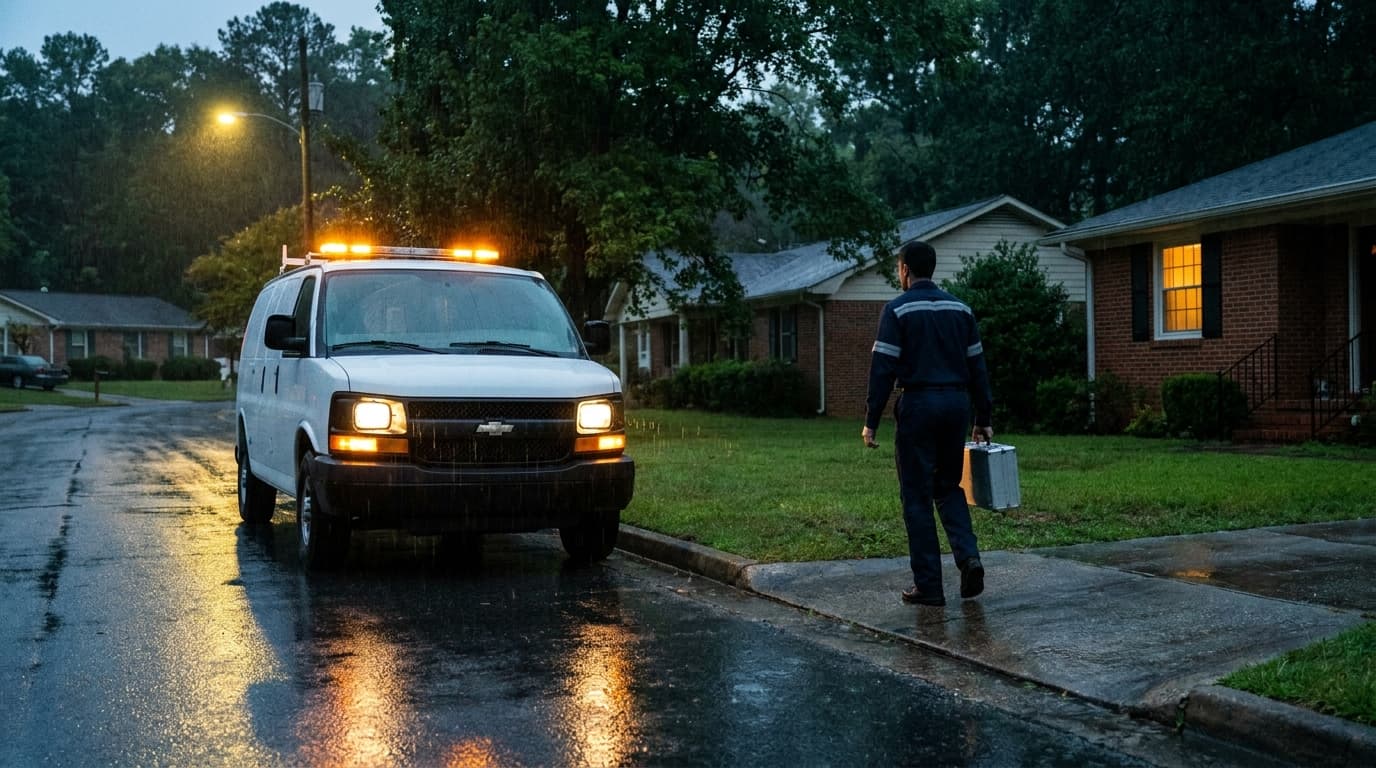
When you call for emergency AC repair at night in Birmingham, here is what a reputable service provider should deliver. A live person should answer the phone or return your call promptly. You should not be routed to a voicemail system and left wondering if anyone will respond. Emergency HVAC service means someone is available when you need them.
The dispatcher should gather basic information about your situation: what symptoms you are experiencing, what you have already checked, and the make and model of your system if you know it. This information helps the technician prepare for the call and bring the parts most likely to be needed.
When the technician arrives, they will perform a systematic diagnostic of your entire system to identify the root cause of the failure. You will receive a clear, written estimate before any work begins. If the repair can be completed that night — and most common repairs can be — the technician will have the parts and tools to do so.
Preventing Nighttime AC Emergencies in Birmingham
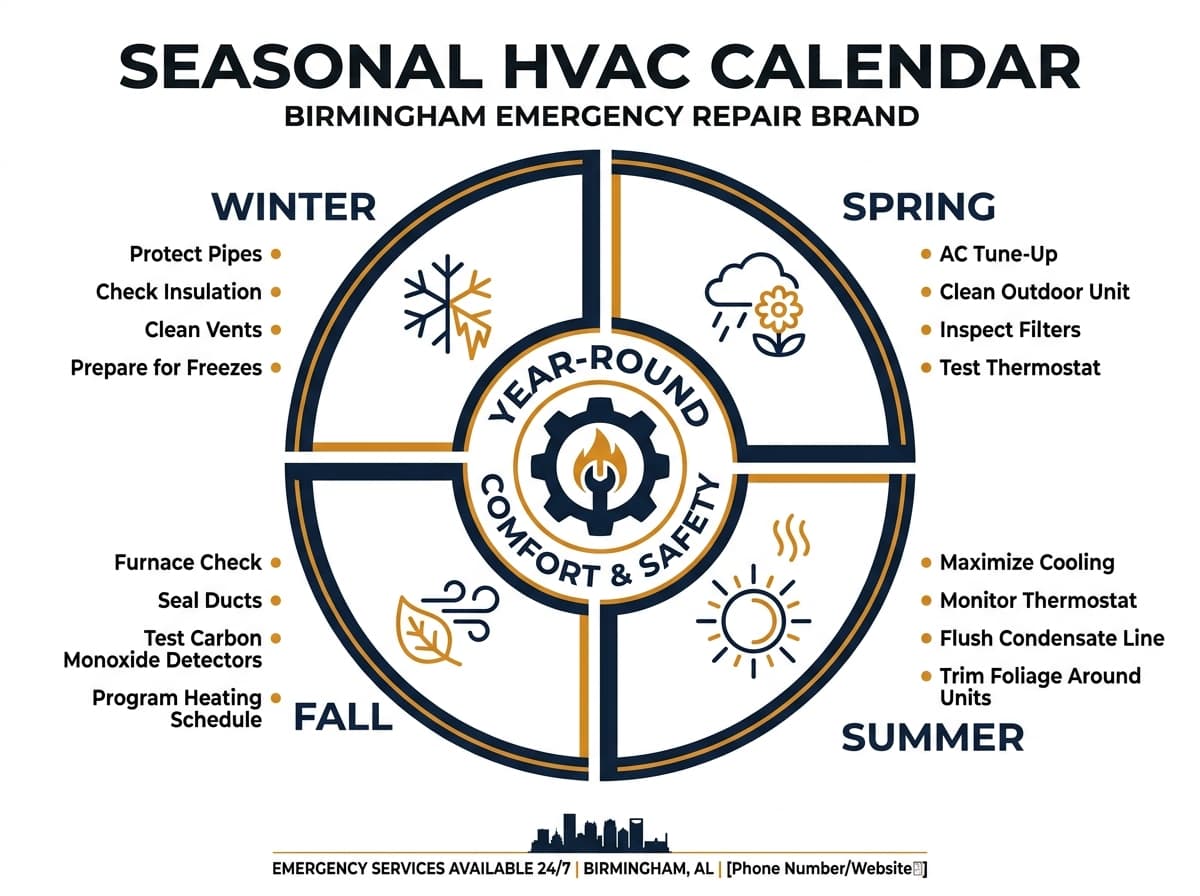
The best way to avoid a nighttime AC emergency is proactive maintenance. A spring tune-up before the summer season identifies weak capacitors, low refrigerant levels, worn contactors, and other developing problems before they cause a failure.
During a maintenance visit, a technician checks:
- Every electrical component including capacitors and contactors
- Refrigerant pressures and charge level
- Coil condition and cleanliness
- Airflow measurements
- Condensate drain system
- All electrical connections for tightness
Between professional visits, change your air filter monthly from April through October. A clean filter ensures proper airflow, prevents coil icing, and reduces the strain on your blower motor. This single habit prevents more emergency calls than any other maintenance task.
Keep the area around your outdoor unit clear of debris, leaves, grass clippings, and overgrown vegetation. The outdoor unit needs at least two feet of clearance on all sides to dissipate heat effectively. A unit choked by vegetation or debris runs hotter, which accelerates component wear and increases the risk of failure during peak demand.
Key Takeaway
Spring maintenance is the single most effective way to prevent nighttime AC emergencies. Most common nighttime failures — capacitors, contactors, refrigerant leaks — are caught and corrected during routine maintenance visits.
When You Need Help Tonight
If your AC has failed tonight and you are reading this article while your house gets warmer, here is the bottom line: check the thermostat, check the breakers, check the filter. If those three steps do not restore cooling, call (205) 206-5252. Our technicians serve the entire Birmingham metro area including Hoover, Vestavia Hills, Homewood, Mountain Brook, Trussville, Pelham, Alabaster, Gardendale, and surrounding communities. We answer the phone at night because Birmingham families need cooling at night. Licensed and insured, professional service.
Frequently Asked Questions
What should I do if my AC breaks down at night in Birmingham?
Emergency AC Repair Service recommends checking three things before calling for nighttime service: verify your thermostat is set correctly and has working batteries, check the circuit breakers for the indoor and outdoor units, and inspect the air filter. If these steps do not restore cooling, call (205) 206-5252 for 24/7 emergency service throughout the Birmingham metro area.
Why do AC systems often fail at night in Birmingham?
AC systems frequently fail in the evening because they have been running at maximum capacity all day during Birmingham summers. By evening, capacitors, compressors, and contactors have endured 10 to 12 hours of continuous thermal and electrical stress. Capacitors are particularly vulnerable to end-of-day failure, and compressor overheating often manifests in the evening hours after sustained peak demand.
Does emergency AC repair cost more at night in Birmingham?
Emergency AC Repair Service is available 24/7 for nighttime AC emergencies in Birmingham. Call (205) 206-5252 any time for a professional diagnostic and written estimate before any work begins.
How do I keep my family safe during a nighttime AC failure in Birmingham?
Open windows if the outdoor temperature is below the indoor temperature to create cross-ventilation. Use all available ceiling and portable fans. Close blinds and curtains on all windows. Avoid using the oven, stove, dryer, or dishwasher. If indoor temperatures exceed 85 degrees with no prospect of immediate repair, relocate vulnerable family members including elderly, infants, and anyone with respiratory conditions to a cooled environment.
Can most nighttime AC repairs be completed the same night?
Yes, most common emergency AC repairs can be completed during the same nighttime service call. The most frequent nighttime failures in Birmingham are capacitors, contactors, and fan motors, all of which experienced HVAC technicians carry as standard truck stock. Compressor replacements and other major repairs may require ordering parts and scheduling a follow-up visit.
Free Birmingham HVAC Homeowner Checklist
Download our seasonal maintenance checklist designed for Birmingham's climate. Covers spring prep, summer survival, fall tune-up, and winter protection — the same checklist our technicians use on service calls.
Call (205) 206-5252 to RequestSources & Citations
- U.S. Environmental Protection Agency — Indoor Air Quality
- U.S. Department of Energy — Heating & Cooling
- ASHRAE — American Society of Heating, Refrigerating and Air-Conditioning Engineers
- ENERGY STAR — Heating & Cooling Equipment
- Alabama General Contractor Licensing Board
- U.S. EPA — Section 608 Technician Certification
Emergency AC Repair Service Editorial Team
Licensed HVAC Professionals • Birmingham, Alabama
Our content is written and reviewed by an Alabama-licensed, EPA Section 608–certified editorial team focused on residential AC and cooling systems. This piece was reviewed against the day-to-day residential cooling work our technicians do across Birmingham’s east corridor — real diagnostic calls, manufacturer training, and current Alabama HVAC code rather than generic advice.
Related Resources
Need Emergency AC Repair in Birmingham?
Available 24/7 across the Birmingham metro area. Licensed and insured.
(205) 206-5252Read Next