AC Emergency? What to Do Before the HVAC Tech Arrives
Practical steps to stay safe and protect your family while waiting for emergency AC repair in Birmingham AL. What helps, what hurts, and what you should never do.
Your AC just died and the technician is on the way. It is 91 degrees outside and climbing inside. What you do in the next hour matters — for your family's comfort, for your safety, and possibly for the condition of your HVAC equipment when the tech walks through the door.
Quick Answer
While waiting for emergency AC repair: protect vulnerable family members first, close all blinds and curtains, run every fan you have, avoid heat-generating appliances, and stay hydrated. When the tech arrives, tell them when the system last worked normally, any unusual sounds, and what you have already tried.
This is not a guide to fixing the AC yourself. That is not the goal here. This is a guide to making smart decisions during a real emergency while a professional is en route, written specifically for Birmingham homeowners who know firsthand how fast a house can become dangerous in an Alabama summer.
Immediate Priority: Protect People First
Before you worry about anything with the HVAC system, take stock of who is in the house. Elderly adults, infants and young children, pregnant women, and anyone with heart conditions, respiratory conditions, or heat-sensitive medications are at significantly elevated risk in heat emergencies. These people should not stay in a home without cooling when outdoor temperatures exceed 90 degrees.
If you have vulnerable family members, make arrangements immediately:
- A neighbor's air-conditioned home
- A local library or community center
- A grocery store or shopping center
- A hotel with immediate availability
Heat stroke can develop faster than most people realize — particularly in elderly adults who may not feel thirst even when significantly dehydrated.
For healthy adults, the risk threshold is higher, but it is still real. Indoor temperatures above 95 degrees are dangerous for anyone. By that point, you should be taking active cooling measures or leaving the home.
85°F
is the indoor temperature threshold where vulnerable family members (elderly, infants, those with medical conditions) should relocate to a cooled environment
Lower the Indoor Temperature as Fast as Possible
Every degree of indoor temperature gain you prevent now is energy your body does not have to spend staying cool. Here is how to slow the temperature rise effectively.
- Close every blind, curtain, and drape in the house immediately — solar heat gain through windows is the primary driver of temperature increase
- Close interior doors to rooms you are not using — concentrate in the smallest, most central area
- Run every ceiling fan on highest setting in counterclockwise mode (summer cooling direction)
- Position portable fans for cross-ventilation if outdoor temp is lower than indoor temp
- Move to the lowest level of the home — heat rises, making ground floors naturally cooler
Key Takeaway
Closing blinds and curtains is the single most impactful action you can take. A single south-facing uncovered window can raise indoor temperature by several degrees per hour during peak sun.
What Not to Run While Waiting
Several common household appliances generate substantial heat and should be avoided during an AC outage:
- The oven and stove — the most obvious heat generators
- The clothes dryer — generates enormous heat and humidity
- The dishwasher — produces heat and steam
- Desktop computers and gaming consoles — meaningful heat in an enclosed space
- Large-screen televisions — produce more heat than you might expect
Minimize electronics use and stick to phones and tablets, which generate very little heat. Use a microwave if you must heat food, and stick to cold meals or delivery if possible.
AC acting up? Do not wait until it dies completely.
Call (205) 206-5252Active Cooling for Your Body
Air movement is the key. A spray bottle filled with water applied to your skin — especially pulse points on the wrists, neck, and temples — combined with fan airflow is genuinely effective body cooling. Cool, damp cloths on the same pulse points provide direct heat exchange.
Stay hydrated. In hot conditions, you lose fluid faster than you feel thirsty, especially at rest. Drink water consistently, not just when you feel thirsty. Avoid alcohol and excessive caffeine, which accelerate dehydration.
Helpful Things to Tell the Technician When They Arrive
Good information speeds up diagnosis significantly. When the technician arrives, be ready to share:
- When did the system last work normally? Not just today — when did it last cool properly?
- Did you hear anything unusual before it stopped? Clicks, buzzes, grinding, or unusual fan sounds?
- Have you done anything to the system recently? Changed the filter, adjusted programming, reset a breaker?
- How old is the system? The model and serial number on the outdoor unit data plate helps determine age
- Has the system had any recent repairs or recurring problems?
Key Takeaway
The more context you provide the technician, the faster the diagnosis and the sooner you are back to cool air. Write down your observations while they are fresh rather than trying to remember when the tech arrives.
The technician is your partner in this — the more they know upfront, the better they can help you. If your AC has failed and you need a technician now, call Emergency AC Repair Service at (205) 206-5252. We serve all of Birmingham, Hoover, Vestavia Hills, Homewood, Mountain Brook, Trussville, Pelham, Alabaster, and Gardendale.
Frequently Asked Questions
What should I do while waiting for an AC technician in Birmingham?
Close all blinds and curtains to block solar heat gain, especially on south and west-facing windows. Turn off heat-generating appliances like ovens and dryers. Use ceiling fans and portable fans to circulate air. Stay hydrated and move to the lowest level of your home where temperatures are coolest.
Should I turn off my AC if it is making strange noises?
Yes. If your AC is making grinding, banging, or screeching sounds, turn it off at the thermostat immediately. Continuing to run a system with mechanical problems can cause secondary damage to the compressor or other components, turning a moderate repair into a major replacement.
Can I check anything myself before calling for AC repair in Birmingham?
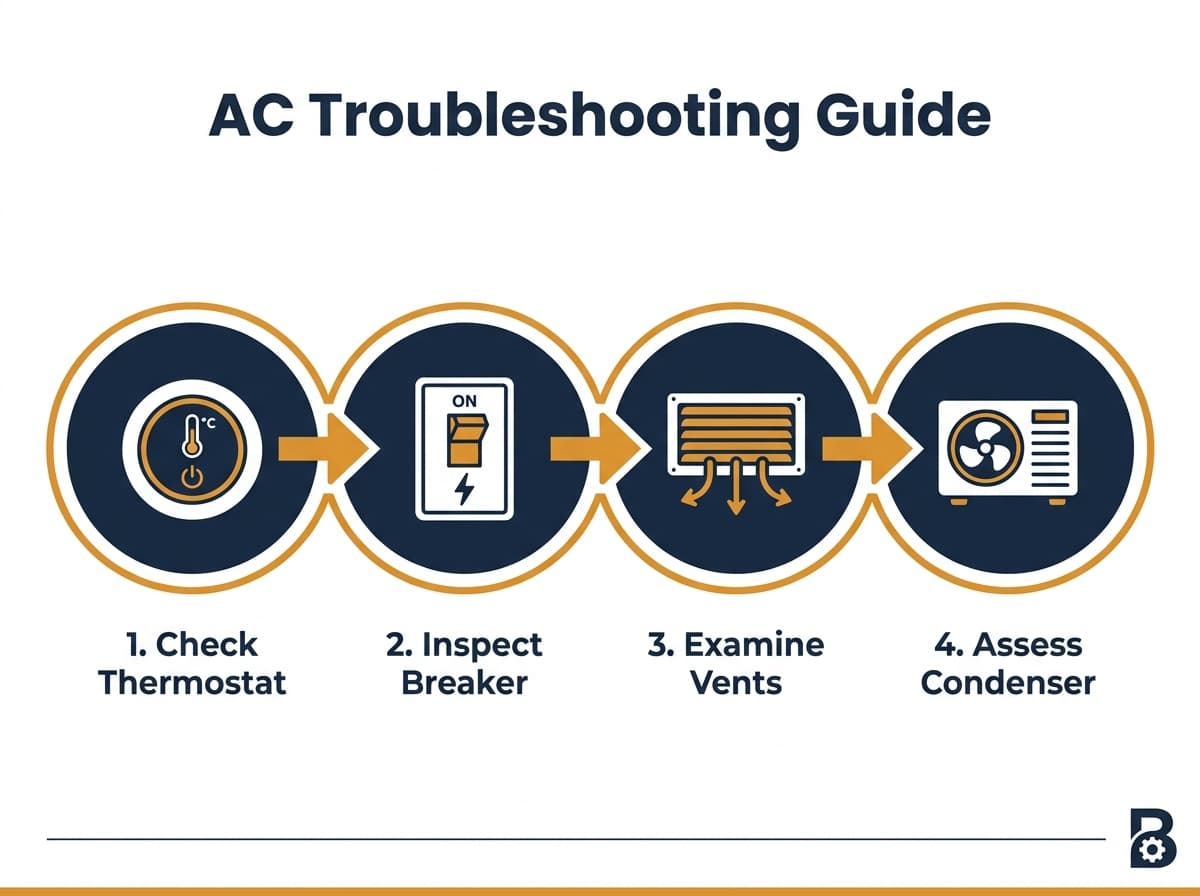
Check three things first: verify your thermostat is set to cool and the temperature is set below room temperature, inspect the air filter and replace it if dirty, and check the circuit breaker panel for tripped breakers on the indoor and outdoor units. These simple checks resolve roughly 15 percent of AC emergencies without a service call.
How hot is too hot inside a Birmingham home without AC?
Indoor temperatures above 85 degrees Fahrenheit with Birmingham humidity levels become a health concern, particularly for elderly residents, infants, people with respiratory conditions, and pets. If your home reaches this threshold and cooling cannot be restored quickly, relocate vulnerable family members to a cooled environment.
What information should I have ready when calling for emergency AC repair?
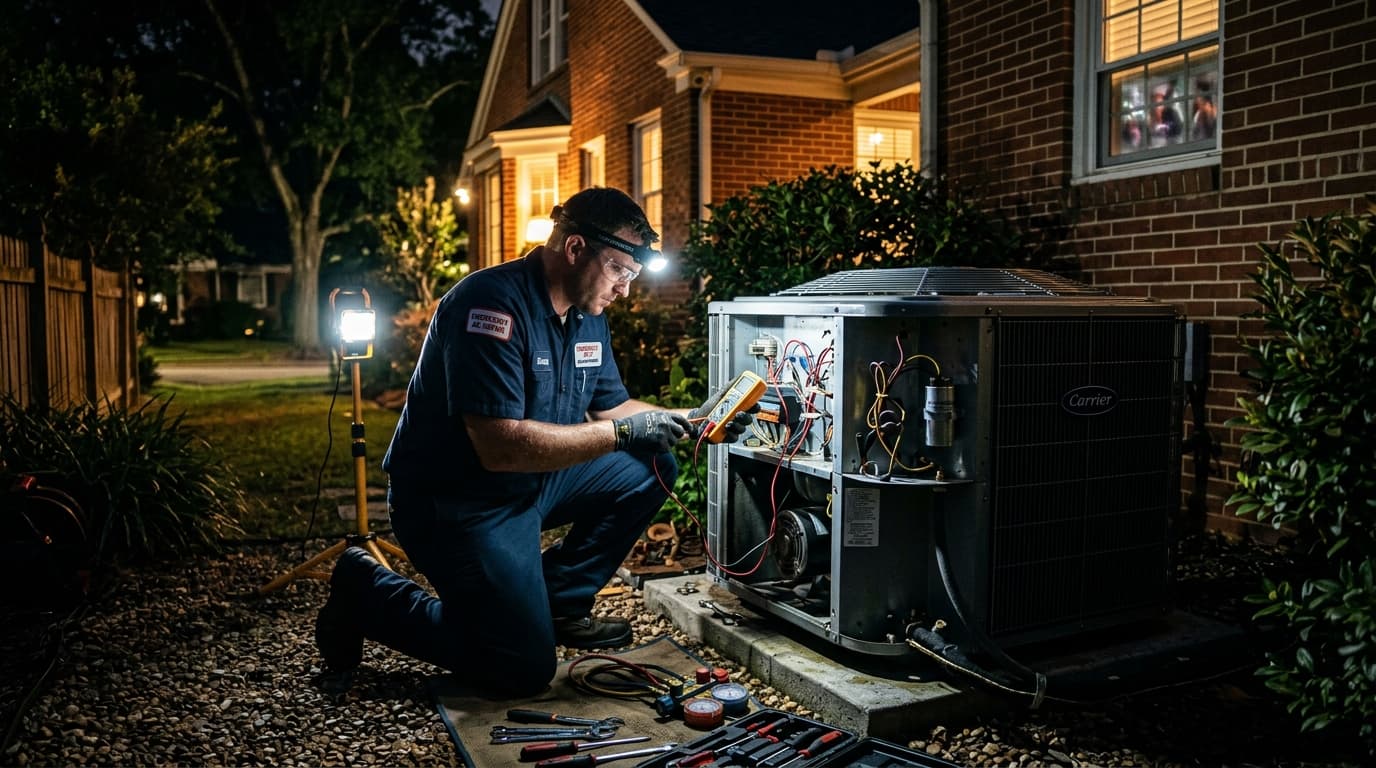
Have the following ready when you call: the brand and approximate age of your system, a description of the symptoms you are experiencing, whether the indoor unit, outdoor unit, or both are affected, any unusual noises or smells, and when the problem started. This information helps the technician prepare the right parts and tools.
Free Birmingham HVAC Homeowner Checklist
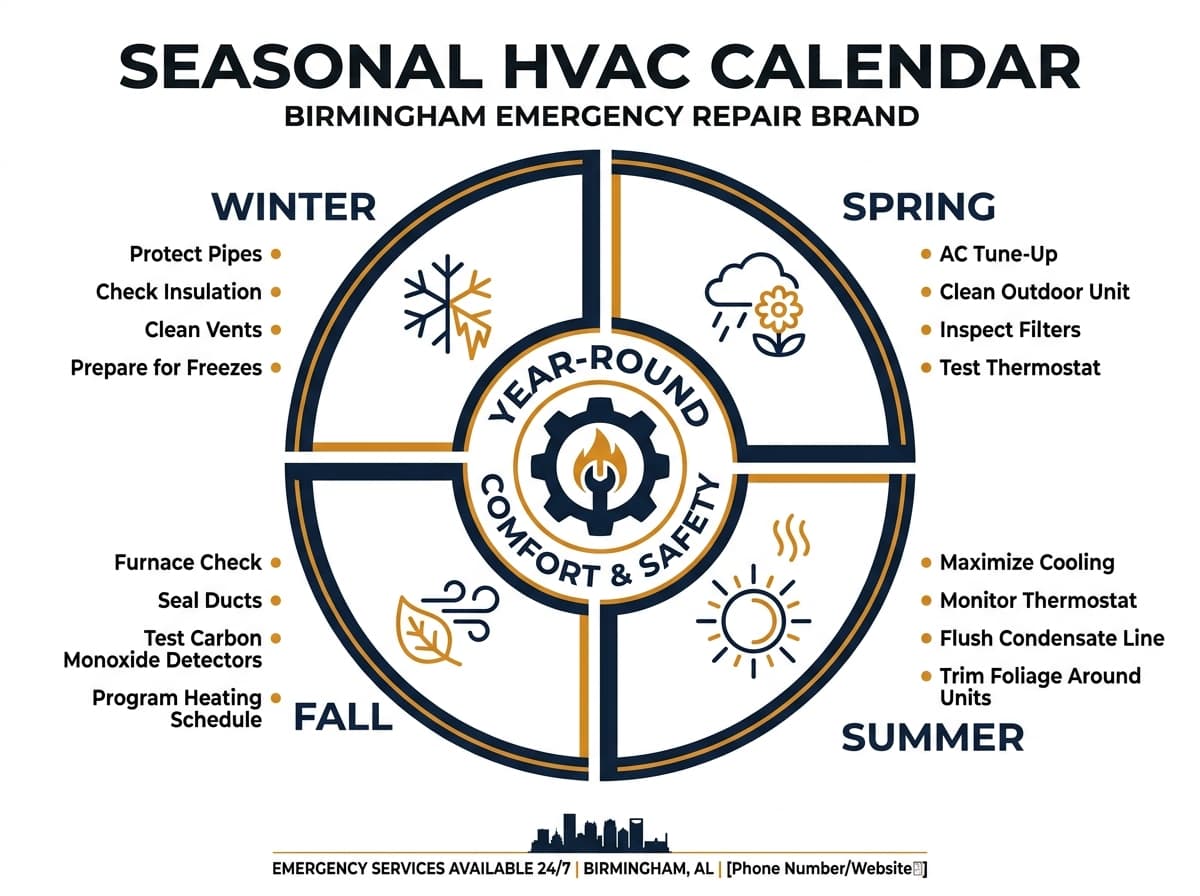
Download our seasonal maintenance checklist designed for Birmingham's climate. Covers spring prep, summer survival, fall tune-up, and winter protection — the same checklist our technicians use on service calls.
Call (205) 206-5252 to RequestSources & Citations
- U.S. Environmental Protection Agency — Indoor Air Quality
- U.S. Department of Energy — Heating & Cooling
- ASHRAE — American Society of Heating, Refrigerating and Air-Conditioning Engineers
- ENERGY STAR — Heating & Cooling Equipment
- Alabama General Contractor Licensing Board
- U.S. EPA — Section 608 Technician Certification
Emergency AC Repair Service Editorial Team
Licensed HVAC Professionals • Birmingham, Alabama
Our content is written and reviewed by an Alabama-licensed, EPA Section 608–certified editorial team focused on residential AC and cooling systems. This piece was reviewed against the day-to-day residential cooling work our technicians do across Birmingham’s east corridor — real diagnostic calls, manufacturer training, and current Alabama HVAC code rather than generic advice.
Related Resources
Need Emergency AC Repair in Birmingham?
Available 24/7 across the Birmingham metro area. Licensed and insured.
(205) 206-5252Read Next