AC Maintenance Myths That Cost You Money | Birmingham AL
These common AC maintenance myths are costing Birmingham AL homeowners real money on repair bills. Expert truth on filters, refrigerant, DIY cleaning, and what actually works.
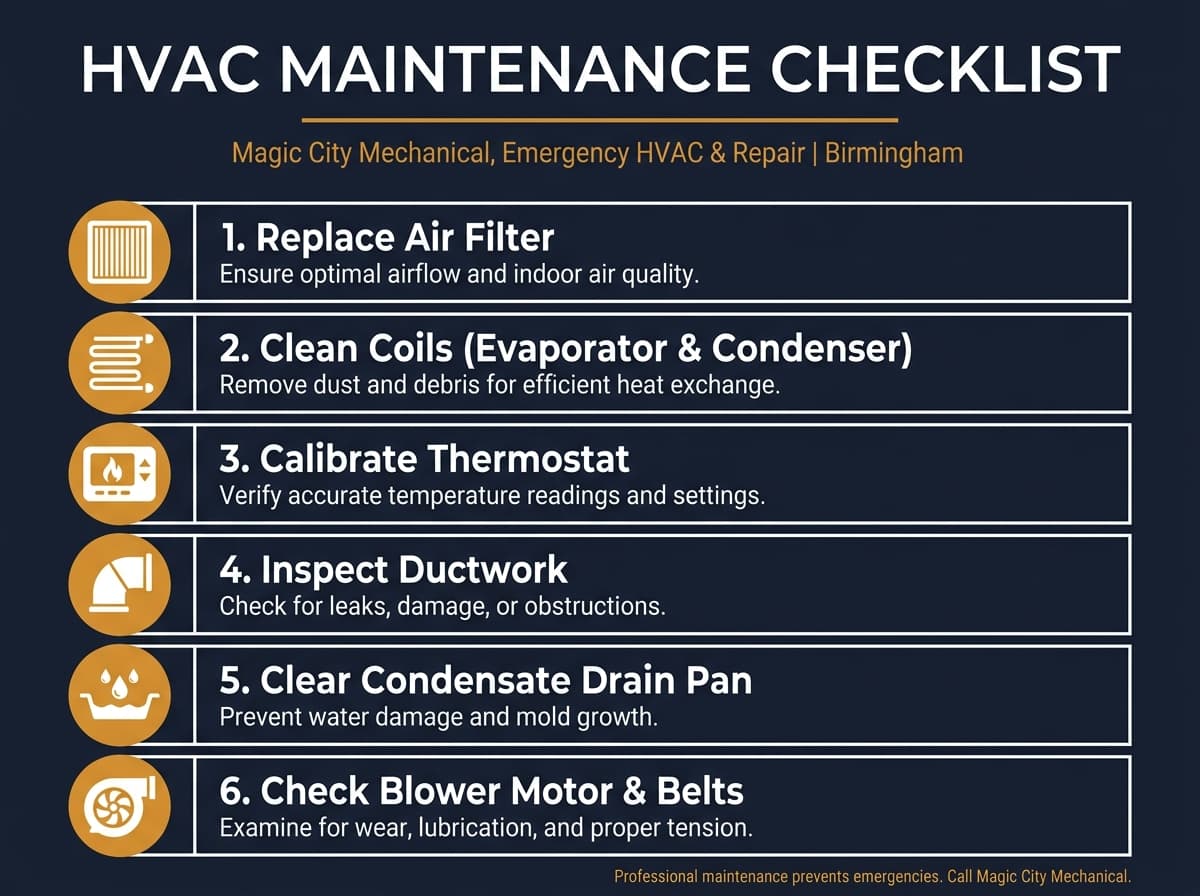
HVAC mythology is surprisingly durable. The same misconceptions about air conditioning maintenance circulate through Birmingham neighborhoods year after year, passed along by well-meaning neighbors, popular home improvement websites, and the occasional technician who prefers a misinformed homeowner to an informed one.
Quick Answer
The most expensive AC maintenance myths: that refrigerant needs annual topping off (it does not — low refrigerant means a leak), that closing vents saves energy (it increases system strain), that thicker filters are always better (they can restrict airflow and cause freezing), and that a working AC does not need service (invisible component degradation causes the most expensive emergency failures).
These myths are not harmless. They lead homeowners to skip maintenance that prevents failures, perform DIY interventions that cause damage, and make decisions about service and replacement based on false premises. Each myth we are about to address has a real cost attached to it.
Myth 1: "My AC Needs Refrigerant Added Every Year"
This is perhaps the most expensive myth in residential HVAC. Refrigerant is not a consumable. It does not get used up like motor oil or gasoline. Your AC system operates in a closed loop — the same refrigerant circulates through the system indefinitely under normal conditions.
If your system is low on refrigerant, it means there is a leak. The refrigerant went somewhere. Simply adding refrigerant without locating and repairing the leak is not maintenance — it is a temporary patch on a problem that is getting worse. The refrigerant will continue to escape, your system will continue to operate in a degraded state, and the compressor will continue to accumulate damage from running with improper refrigerant charge.
| Myth | Reality | Cost of Believing the Myth |
|---|---|---|
| Refrigerant needs annual refill | Low refrigerant = a leak that needs repair | Compressor damage from running on low charge |
| Closing vents saves energy | Increases duct pressure and blower strain | Higher energy bills, blower motor wear |
| Thicker filters are better | Can restrict airflow and cause coil icing | Frozen coil, compressor stress |
| New systems skip maintenance | Skipping voids warranty, hides early problems | Denied warranty claims, accelerated aging |
| Hose-cleaning condenser is fine | High pressure bends delicate fins | Reduced efficiency, higher pressures |
| If it cools, it is fine | Invisible degradation causes emergency failures | Surprise breakdowns during heat waves |
Key Takeaway
A reputable technician who tells you your system needs refrigerant every year and offers to add it without investigating the leak is not providing honest service. The correct response is: find the leak, fix the leak, then recharge to spec.
Myth 2: "Closing Vents in Unused Rooms Saves Energy"
This one sounds logical. If you are not using a room, why cool it? Close the vents and the cooled air goes where you actually want it. It seems like a sensible way to save on electricity bills.
The problem is that your HVAC system was designed and sized to deliver air to every vent in the house. The ductwork, air handler, and outdoor unit form an integrated system with specific airflow requirements. Closing vents does not eliminate that airflow — it redirects pressure back into the duct system, increasing static pressure throughout.
What happens when you close vents:
- Blower motor works harder against greater resistance, consuming more energy
- Increased duct pressure causes flex duct connections to leak
- Static pressure can cause rigid duct seams to open
- The outdoor unit continues at full capacity regardless of closed vents
- Net result: higher energy bills, not lower
Keep your vents open. If certain rooms are too cold or too warm, that is an airflow balance problem to be diagnosed, not addressed by closing vents.
AC acting up? Do not wait until it dies completely.
Call (205) 206-5252Myth 3: "A Thicker Filter Means Better Protection"
Homeowners who want to protect their HVAC system from dust and debris sometimes install the thickest, most restrictive air filters they can find — the ones with MERV ratings of 11 to 13 or higher, which look dense and solid and feel substantial in your hand.
These high-MERV filters do a better job of capturing small particles. They are excellent for homes with allergy sufferers or compromised immune systems when the system is designed to handle them. For most residential HVAC systems, however, these highly restrictive filters create airflow problems that outweigh their filtration benefits.
MERV 8-10
is the sweet spot for most residential HVAC systems — effective filtration without dangerous airflow restriction
A standard residential air handler is designed to move air against a specific range of static pressure. A very restrictive filter increases static pressure at the inlet, reducing airflow through the evaporator coil. We have already established what restricted coil airflow leads to: icing, compressor stress, and potential system failure.
If you want to use higher-MERV filters, check your system's specifications — many manufacturers specify the maximum filter MERV rating for their equipment. Alternatively, thicker 4-inch or 5-inch media filters in a properly sized filter housing can achieve high filtration efficiency with much lower static pressure drop than thin, dense panel filters.
The most important filter rule remains: check it monthly and replace it before it becomes restricted, regardless of what type you use.
Myth 4: "New AC Units Don't Need Maintenance"
A new system does not need emergency repairs, but it does need maintenance. This distinction matters because skipping early maintenance on a new system creates the conditions for accelerated aging and early failure.
The first maintenance visit after a new installation — typically at the one-year mark — establishes a baseline measurement of system performance:
- Supply and return temperature measurements
- Refrigerant charge verification
- Electrical connection tightness (new connections can loosen after initial thermal cycling)
- Condensate system inspection before biological growth becomes established
Skipping the first few years of maintenance because the system is "new" is the most reliable way to be surprised by a warranty-voiding condition at year 5 or 6 when something goes wrong. Most manufacturer warranties require evidence of regular professional maintenance as a condition of warranty coverage. A claim denied because no maintenance records exist is a common and expensive disappointment.
Key Takeaway
Most manufacturer warranties require proof of regular professional maintenance. Skipping maintenance on a new system does not save money — it risks voiding the warranty that protects your investment.
Myth 5: "I Can Clean the Condenser Coil Myself with a Hose"
Homeowners who want to be proactive about their AC maintenance sometimes decide to clean the outdoor condenser coil themselves. They rinse it down with a garden hose, which removes visible surface debris and makes the unit look cleaner. This seems like responsible maintenance.
The problem is technique. Condenser coils have aluminum fins arranged in thin parallel rows. These fins are delicate and easy to bend. High-pressure water aimed directly at the fins bends them in ways that are invisible from a normal viewing distance but dramatically reduce airflow through the coil. Bent condenser fins restrict the heat exchange that the condenser depends on, which raises refrigerant pressures, reduces system efficiency, and stresses the compressor.
Safe DIY condenser maintenance:
- Gently rinse from the inside out (not outside in) with low-pressure water
- Clear visible debris, leaves, and grass clippings from around the unit
- Maintain two feet of clearance on all sides
- Leave actual coil cleaning with chemicals and fin combs to professionals
Myth 6: "If the AC Is Cooling, It Doesn't Need Service"
This may be the most widespread myth of all, and it is the direct cause of most of the emergency calls we handle during August heat waves.
A system that is currently cooling your home may be doing so with:
- A capacitor testing at 60 percent of rated capacity
- A contactor showing arc damage that will weld shut on one of the next hundred starts
- A refrigerant charge 15 percent below specification
- Electrical connections with developing resistance
These conditions are invisible to the homeowner. The house feels cool. The thermostat is satisfied. Everything seems fine. But the failing components are marching toward the failure point, and that failure will arrive when the system is under maximum stress — a 98-degree afternoon when it has been running for eight straight hours.
98°F
is when most "surprise" failures happen — during peak demand, when hidden component degradation finally reaches its breaking point
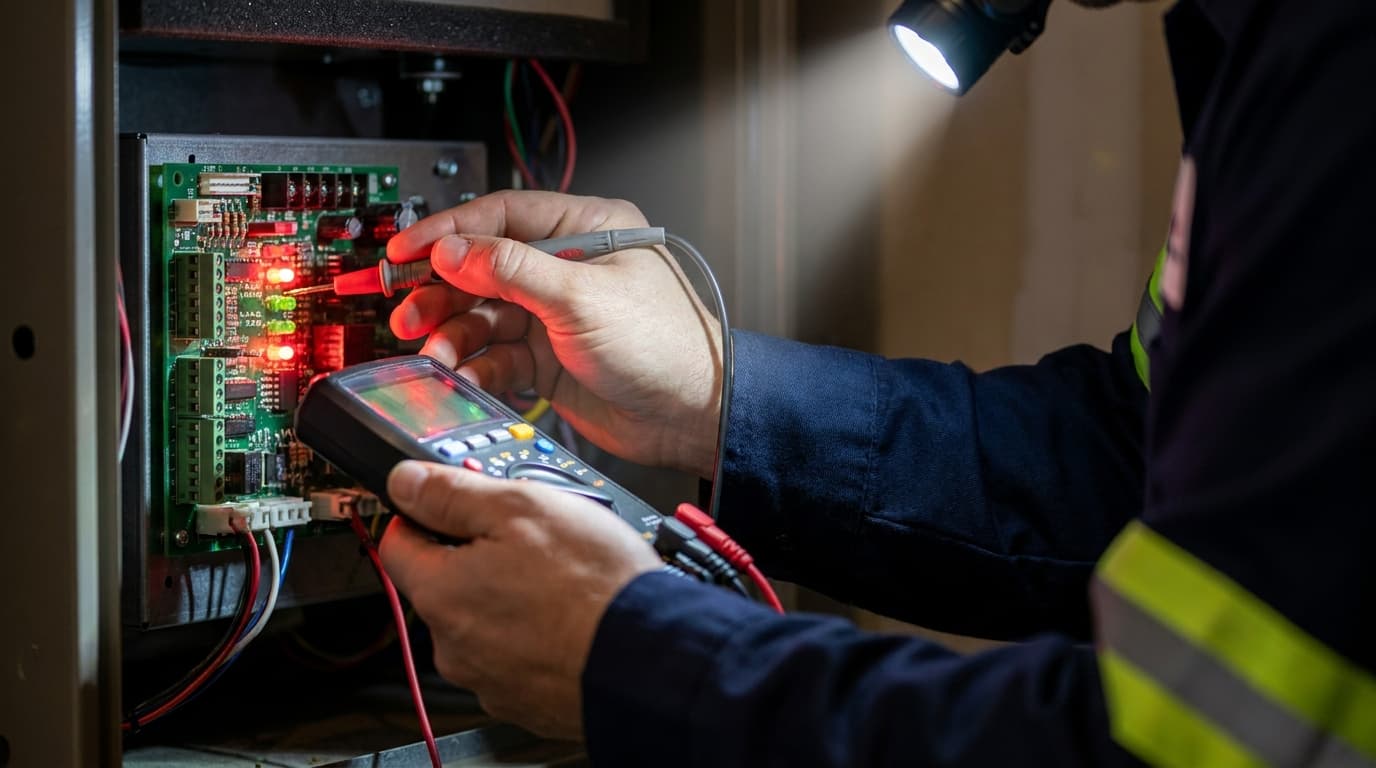
Annual maintenance by a qualified technician catches these developing failures because it includes measurements that reveal degradation before symptoms appear. Capacitors are tested, not just visually inspected. Refrigerant charge is measured, not assumed. Electrical connections are checked for resistance, not just examined for visible damage.
The systems that fail dramatically during Birmingham heat waves are not random. They are systems that showed measurable signs of wear that no one measured. Annual maintenance converts expensive emergency surprises into affordable scheduled repairs.
AC acting up? Do not wait until it dies completely.
Call (205) 206-5252Call Emergency AC Repair Service at (205) 206-5252 to schedule a maintenance visit before this cooling season. We serve all of Birmingham, Hoover, Pelham, Alabaster, Helena, Chelsea, Calera, and surrounding communities with honest service and quality workmanship.
Frequently Asked Questions
Do I really need to change my AC filter every month in Birmingham?
During Birmingham cooling season from April through October, yes. High pollen counts, dust, and the extended runtime mean filters clog faster than in milder climates. A clogged filter restricts airflow, forces the system to work harder, increases energy consumption, and can cause the evaporator coil to freeze. Monthly changes during summer are the single most impactful maintenance task a homeowner can perform.
Is closing vents in unused rooms bad for my AC system?
Yes. Closing supply vents increases static pressure in the duct system, which forces the blower motor to work harder and can cause air leaks at duct joints. In Birmingham homes where ductwork is often in unconditioned attic space, increased pressure means more cooled air leaking into the attic. Close no more than 20 percent of vents in your home.
Does turning my AC off when I leave save energy in Birmingham?
Turning the AC completely off in Birmingham summer heat forces the system to work much harder to recover when you return because the house absorbs significant heat through the building envelope and humidity levels rise rapidly. A programmable thermostat set 5 to 7 degrees higher during away hours saves energy without the extreme recovery penalty.
Do higher MERV rated filters improve my AC performance?
Not necessarily. High-MERV filters like MERV 13 and above restrict airflow more than standard filters. Most residential HVAC systems in Birmingham are designed for MERV 8 to 10 filters. Using a filter with too high a MERV rating without modifying the system can reduce airflow enough to cause coil freezing and compressor strain. Check your system specifications before upgrading filter ratings.
Can I clean my own AC condenser coils in Birmingham?
Homeowners can safely rinse debris from the exterior of the outdoor condensing unit using a garden hose on a gentle setting. Spray from inside out to push debris away from the coil. However, chemical coil cleaning and cleaning of the indoor evaporator coil should be done by a licensed technician to avoid damaging the delicate aluminum fins or creating drainage problems.
Free Birmingham HVAC Homeowner Checklist
Download our seasonal maintenance checklist designed for Birmingham's climate. Covers spring prep, summer survival, fall tune-up, and winter protection — the same checklist our technicians use on service calls.
Call (205) 206-5252 to RequestSources & Citations
- U.S. Environmental Protection Agency — Indoor Air Quality
- U.S. Department of Energy — Heating & Cooling
- ASHRAE — American Society of Heating, Refrigerating and Air-Conditioning Engineers
- ENERGY STAR — Heating & Cooling Equipment
- Alabama General Contractor Licensing Board
- U.S. EPA — Section 608 Technician Certification
Emergency AC Repair Service Editorial Team
Licensed HVAC Professionals • Birmingham, Alabama
Our content is written and reviewed by an Alabama-licensed, EPA Section 608–certified editorial team focused on residential AC and cooling systems. This piece was reviewed against the preventive-maintenance routine our technicians run before each cooling season — coil cleaning, electrical checks, and the wear patterns that decide whether a unit makes it through an Alabama August.
Related Resources
Need Emergency AC Repair in Birmingham?
Available 24/7 across the Birmingham metro area. Licensed and insured.
(205) 206-5252Read Next