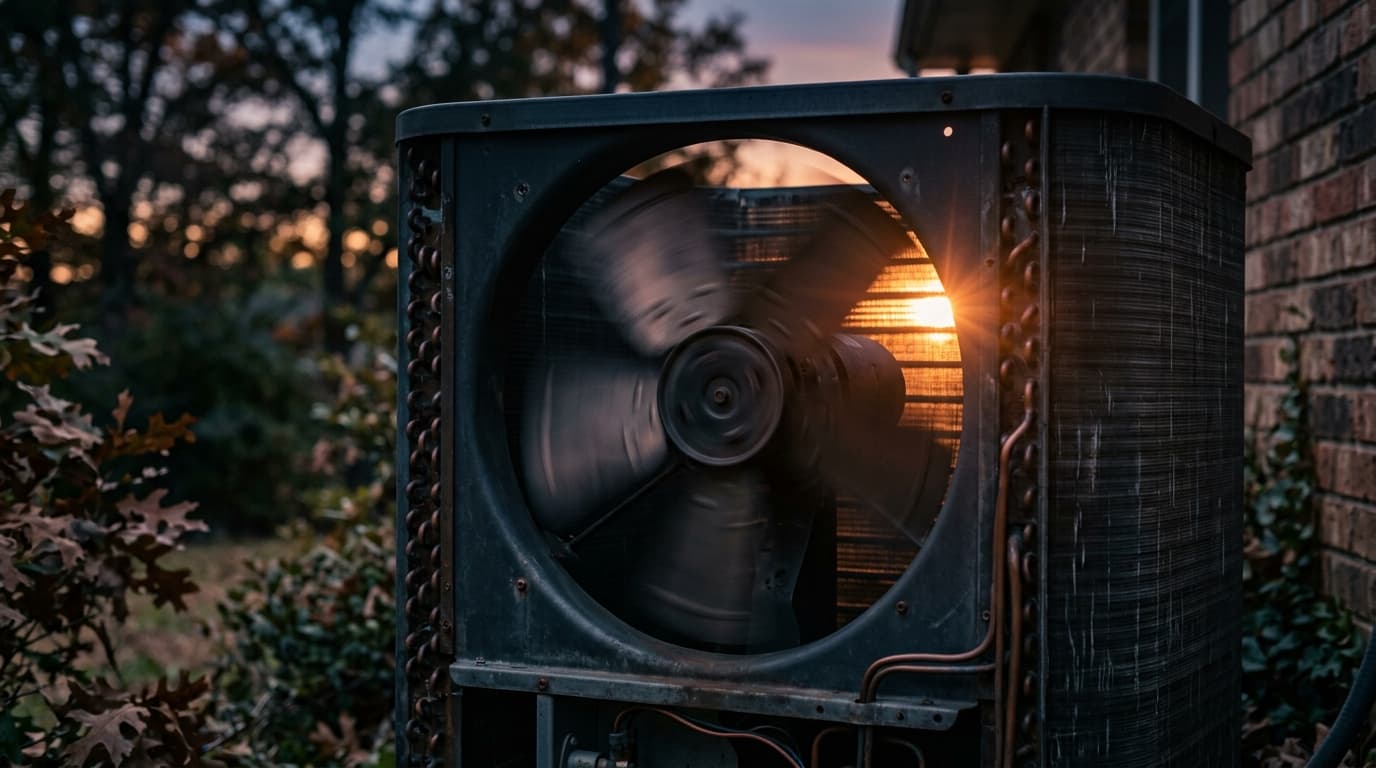
BLUF: a humming AC is an electrical problem nine times out of ten. Outdoor unit humming with no fan spin = failed start capacitor — kill power within 30 seconds to protect the compressor. Indoor humming = blower motor capacitor or transformer. Buzzing (irregular) = loose mechanical contact. Light constant 60Hz hum from the contactor when off = normal standby noise. Anything new and loud needs a multimeter, not a guess.
How Loud Is Too Loud?
A healthy residential outdoor condenser runs at 65 to 75 decibels measured one foot from the unit. Modern variable-speed inverter units can run as quiet as 55 dB on low capacity. A unit that suddenly jumps from a familiar 70 dB to a head-turning 90 dB is telling you something failed.
For reference, per OSHA noise exposure standards, 85 dB is the threshold where prolonged exposure causes hearing damage. If your AC is louder than a vacuum cleaner standing three feet away, something has changed and it is worth a service call. If the change happened today, that is more urgent than a slow drift over weeks.
Outdoor Unit Humming — Every Cause
Walk to the outdoor condenser. The thermostat is calling for cool. What you hear tells you what is wrong:
Loud 60Hz hum, fan not spinning, compressor not starting. This is the classic failed-capacitor symptom. Compressor and fan motor are receiving 240V but lack the capacitive boost to overcome locked-rotor inertia. Both are drawing stall current — heating up fast. Cut power at the disconnect within 30 seconds. Replace the dual-run capacitor.
Loud hum, fan spinning, compressor not running. Same cause but the fan capacitor side is okay and the compressor side has failed. The fan is fine; the compressor is stalled. Cut power. Capacitor replacement.
Quiet hum, nothing moving. The contactor coil is energized (24V from the thermostat) but the contacts are not closing — meaning 240V is not reaching the compressor and fan. Causes: pitted contacts, welded contacts in the open position, broken contactor coil. Replacement is straightforward.
Loud buzzing followed by a snap, then silence. A contactor arcing as it tries to make contact across pitted surfaces. The snap was either the breaker tripping or the contactor coil burning out. Either way, a contactor swap is on the bill.
Steady running but louder than usual. Most often a failing condenser fan motor — bearings dry, housing loose, or fan blade unbalanced. Per ASHRAE sound guidance, fan motor noise rises measurably as bearings degrade. Replacement is a 30 to 45 minute job.
Rhythmic banging or knocking. Compressor on its last legs — internal bearing failure, broken valve, or loose mounting. This is not a parts-store fix. We are talking compressor replacement (expensive on a 12+ year old system) or full system replacement.
Indoor Air Handler Humming — Every Cause
The indoor unit (air handler or furnace blower section) has its own causes:
Blower motor humming, wheel not turning. Blower motor capacitor failed, or motor windings shorted. Same diagnostic logic as the outdoor unit — capacitor first, motor second. PSC motors are cheap to replace; ECM (electronically commutated) motors are expensive.
High-pitched 60Hz transformer hum. The 24V control transformer is energized. Some hum is normal. Loud, high-pitched hum that you did not hear last week means transformer is failing or under unusual load. Replacement is a $50 part.
Vibration that resonates through the cabinet. Often a loose panel screw, a missing isolator pad, or a blower wheel out of balance from accumulated dust. Tightening, cleaning, or replacing the wheel resolves it.
Damper actuator buzz. In zoned systems, the damper motors buzz when energized. Stuck damper actuator buzzes continuously and pulls more current than rated.
Buzzing vs Humming — They Are Different
Homeowners use the words interchangeably. Technicians do not. Here is the technical difference:
Humming is steady, tonal, and almost always around 60Hz (the line-frequency of US power) or harmonics of it. It indicates electrically energized components without movement — stalled motors, energized contactor coils, transformers under load. Humming is electrical.
Buzzing is irregular, edgy, and often modulated — getting louder and softer or starting and stopping. It indicates intermittent electrical contact (arcing across pitted contactor surfaces), or mechanical components in marginal contact (loose panel against vibrating motor). Buzzing is contact instability.
Rattling is high-frequency mechanical — loose hardware, small debris in the fan blades, or a panel screw resonating against sheet metal. Rattling is mechanical looseness.
Knocking is rhythmic, low-frequency, and almost always means moving parts hitting each other inside the compressor or blower. Knocking from the compressor is the worst news on this page.
When to Cut Power Immediately
Cut power within 30 seconds in these situations: outdoor unit humming with no fan spin, outdoor unit humming with fan spin but compressor silent, smell of burning electrical insulation, smoke, or a humming that gets louder while you stand there. Use the disconnect box mounted on the wall near the outdoor unit — flip it to the off position. If you cannot reach the disconnect safely, kill the breaker at the panel.
Once power is off, call. Do not flip the disconnect back on to "see if it fixed itself." If the compressor was stalled, the windings are still hot — energizing again can finish damaging them. Wait for a technician.
What a Technician Actually Checks
The diagnostic flow on a humming-noise call:
- Listen first. Indoor or outdoor? Steady or intermittent? Tonal or buzzy?
- Multimeter at the contactor. Is 240V reaching the compressor? Is 24V reaching the contactor coil?
- Capacitor test. Microfarad reading vs label rating. Most common fix.
- Compressor amperage measurement. Does it spike to locked-rotor amps and stay there? That is a stall.
- Fan motor amperage and bearing check. Loose, dry, or unbalanced?
- Visual inspection of the whole unit. Loose panels, missing isolators, debris in the fan.
- Refrigerant pressure check (if all electrical clears). High head pressure causes louder running.
If you are in Birmingham or the east corridor — Trussville, Mountain Brook, Chelsea, Calera, Montevallo, Helena — and the AC just started making a noise it never made before, see the emergency repair page for what an emergency call actually looks like, and the tripping-breaker guide if the noise is paired with breaker trips.