Emergency AC Repair
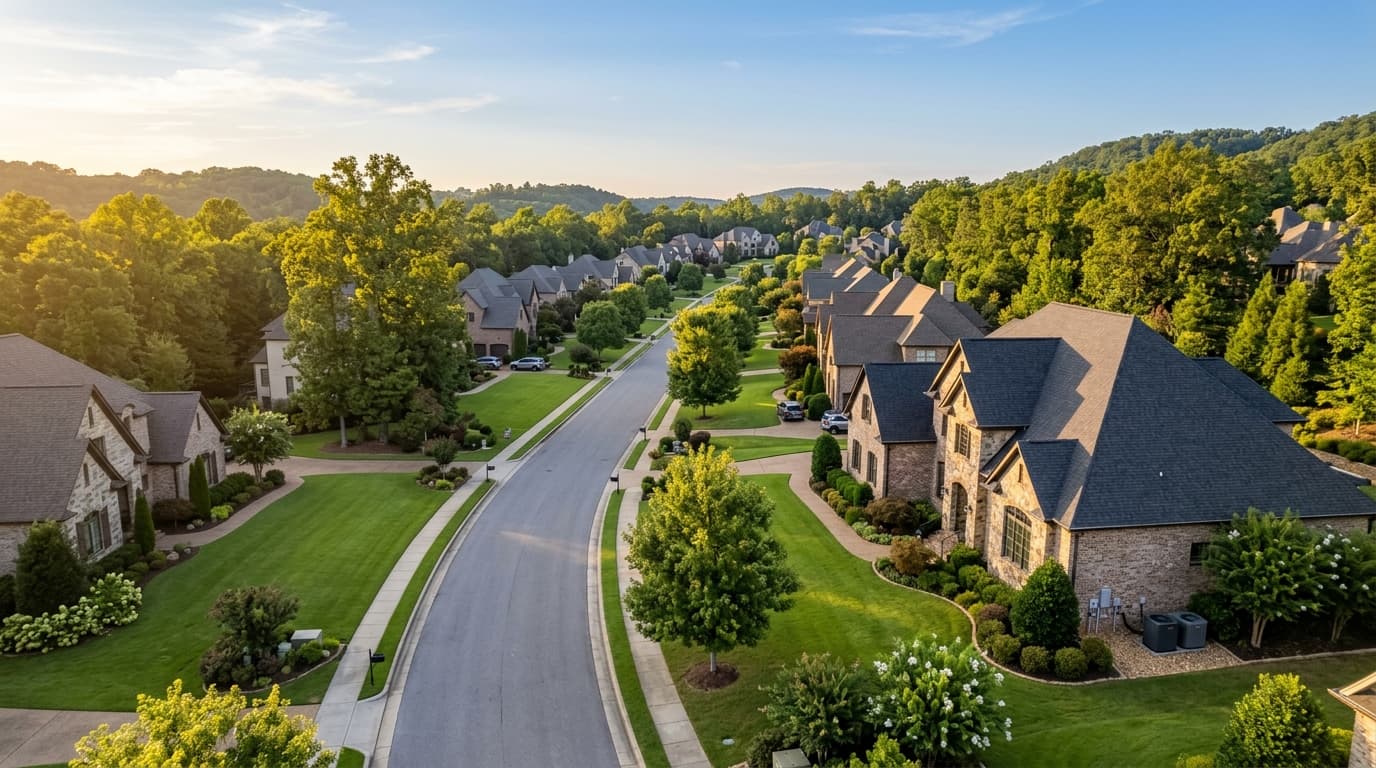
Greystone, Alabama residential street with an AC condenser visible at golden hour
Service Area · Greystone, Alabama

AC out in Greystone? We answer.

Greystone is a master-planned Shelby County community between Highway 280 and Highway 119. Large floor plans, zoned systems, and builder-grade equipment hitting the 15-to-25-year mark drive most of the HVAC calls we handle here. Licensed technicians, written estimate before any work, 24 hours. Call (205) 206-5252.

Alabama Licensed · EPA Section 608 · NATE Certified · Fully Insured

Private & Direct

Request a call-back.

A licensed technician calls you. No call center, no quote bots.

No spam. No bots. Real technician call-back.

East Corridor Cities
5

Leeds · Moody · Pinson · Clay · Springville

Service Area
I-20

East Corridor · Leeds to Springville

Manufacturer Brands Serviced
12

Trane · Carrier · Lennox · Rheem · Goodman · York · Daikin · Mitsubishi · Fujitsu · Bryant · American Standard · Amana

Dispatch Hours
24/7

365 days a year

§ I · The Territory

Emergency AC repair in Greystone.

Greystone sits in the rolling terrain between Highway 280 and Highway 119 in Shelby County, roughly 20 miles southeast of downtown Birmingham. The community developed primarily in the 1990s and 2000s as a planned residential corridor, and the result is a housing stock that is large, consistent in construction era, and now hitting the window where original builder-grade HVAC equipment begins to fail in volume.

Most Greystone homes were built between 1995 and 2010. That puts the original condensers and air handlers at 15 to 30 years of service life. The failure curve on residential HVAC sharpens after year 15 in Alabama's climate — capacitors, contactors, fan motors, and control boards all reach end of useful life on a predictable schedule. A Greystone system that has never had a service call is not a healthy system. It is a system that has not failed yet.

Greystone · By the Numbers
Population
9,800
County
Shelby
Median Home
$385,000
Summer High
93°F
§ II · What Breaks Here

The failures we see most in Greystone.

Every city in the east corridor has its own pattern of HVAC failures, driven by housing age, climate exposure, and equipment generation. These are the calls we expect from Greystone.

Failure Mode · 01

Builder-Grade Equipment Past Service Life

1990s-to-2000s builder-grade condensers and air handlers in Greystone are now 15 to 30 years old. Capacitors test weak, contactors show pitting, and condenser fan motors draw elevated amps before they seize. These failures compound: a weak capacitor stresses the compressor, a stressed compressor runs hot, and heat accelerates bearing wear in the fan motor. Catching the capacitor before it takes the compressor is the whole point of a diagnostic visit.

Failure Mode · 02

Multi-Story Temperature Stratification

Two-story Greystone homes with open staircases and vaulted ceilings concentrate heat above the main living level. A single thermostat on the first floor shuts the system off after satisfying at that sensor while bedrooms 8 feet above stay 6 to 10 degrees warmer. The fix is a zoned system with dampers and independent thermostats — not a larger unit. An oversized unit short-cycles, handles humidity worse, and still cannot solve a stratification problem driven by building geometry.

Failure Mode · 03

Crawl Space Humidity in Return Ducts

Greystone's clay soil holds moisture through the cooling season. Crawl space humidity above 70% combined with return boots that bypass the vapor barrier pulls damp air across the evaporator coil. The result is accelerated coil fouling, condensate overflow, and reduced capacity during peak load hours. Sealing the return boots and adding crawl space vapor barrier stops the moisture at the source.

Failure Mode · 04

Golf Course Condenser Fouling

Properties near Greystone Country Club accumulate pollen, grass clippings, and irrigation-mist deposits on condenser fins at above-average rates. A fouled condenser coil raises head pressure, increases compressor amperage, and cuts cooling capacity without triggering any fault code. Properties along the golf course corridor need condenser cleaning every six to nine months, not annually.

§ IV · Neighborhoods

Where we work in Greystone.

01

Greystone Farms

1990s-era homes on the western edge near Highway 280 — builder-grade systems in the 20-to-30-year range, first-replacement window.

02

Greystone North

Two-story traditional homes on the golf course north side — stratification and condenser fouling the dominant issues.

03

Greystone Highlands

Larger homes on elevated terrain between 280 and 119 — clay soil crawl spaces create humidity infiltration in return ductwork.

§ VI · How It Works

Three steps, no theater.

01Call

You ring, we answer.

Phone rings on a technician's truck, not a call center. We ask three questions: address, make/model if you know it, what you're seeing. If we can't reach you quickly, we say so.

02Diagnose

We show you what's wrong.

Every system gets a full diagnostic. Capacitors tested, refrigerant pressure checked, airflow measured. We explain the failure in plain English and write an estimate before you authorize anything.

03Fix

First-visit repairs, documented.

Commonly-needed parts ride on every truck. Most repairs finish the same visit. Work is documented with photos, a written invoice, and manufacturer warranty details on any installed parts.

§ III · Where We Work

The I-20 and I-59 east corridor.

Every one of our trucks is based east of the Birmingham metro. That means we are on your side of the interstate before most downtown companies have dispatched. We decline calls we can't reach quickly — no over-committing, no wasted drives.

Tap a city on the map to read its profile.

I-20 EASTI-59 NORTHEASTBirmingham(metro anchor)PinsonClaySpringvilleMoodyLeedsN

Stylized service-territory diagram. Not to geographic scale.

§ V · Questions From Greystone

The honest answers.

What HVAC problems are most common in Greystone homes?

The three most common calls from Greystone are: aging builder-grade equipment failing (capacitors, contactors, fan motors on 15-to-25-year-old condensers); temperature stratification in two-story homes with open staircases where upstairs bedrooms run 6 to 10 degrees warmer than the thermostat location; and crawl space humidity infiltrating return ducts, which causes evaporator coil icing and drain pan overflow. Each has a different fix — a capacitor swap is 45 minutes, solving stratification requires a zoned system design, and crawl space humidity requires vapor barrier work.

Why are upstairs bedrooms so much hotter than the rest of the house?

Heat rises. In a two-story home with an open staircase, warm air migrates upward continuously. The thermostat sits at the first-floor level, satisfies there, and shuts the system off while bedrooms above stay several degrees warmer. Greystone homes from the 1995-to-2010 build era typically had single-zone systems that cannot compensate for this geometry. A two-zone system with a second thermostat upstairs and motorized dampers in the ductwork solves the problem. A larger unit does not — it cools the main level faster and shuts off sooner, making upstairs worse.

How old is the HVAC equipment in most Greystone homes?

Most Greystone homes were built between 1995 and 2010, putting original equipment at 15 to 30 years of service. The Department of Energy rates residential central air systems for 15 to 20 years of service life with proper maintenance. Equipment installed in the late 1990s to early 2000s that has not been serviced regularly is at or past that range. The failure rate on capacitors, contactors, and fan motors accelerates sharply after year 15 in Alabama's climate — the combination of high summer load hours and heat-index peaks above 105°F shortens component life compared to milder markets.

Does living near the Greystone Country Club affect my HVAC?

Yes. Properties near the golf course see condenser coils foul faster from pollen, grass clippings, and irrigation mist. A fouled coil reduces heat rejection capacity, raises head pressure, increases compressor load, and cuts efficiency — without triggering any fault code your thermostat would catch. Properties along the golf course corridor should plan on condenser cleaning every six to nine months. Properties further from the fairways can typically go a year between cleanings.

Should I repair or replace my aging Greystone system?

The standard threshold: if the repair cost exceeds one-third of replacement cost and the system is over 12 to 15 years old, replacement is typically the better financial decision over a 5-year horizon. In Alabama's climate with 1,600+ annual run hours, a 20-year-old system is a higher-risk repair than the same age unit in a milder state. We give you a written estimate for the repair, explain the probability of the next failure based on the equipment's age and condition, and let you decide. We do not push replacement when a repair makes sense.

Do you serve Greystone 24 hours a day?

Yes. Emergency AC Repair Service dispatches 24 hours a day, 365 days a year — nights, weekends, and holidays included. Greystone is in our Shelby County service area along the Highway 280/119 corridor. Call (205) 206-5252 with your address and we will tell you honestly when to expect a technician.

What HVAC brands are most common in Greystone homes?

Greystone's build era — 1995 to 2010 — favored Carrier, Trane, Lennox, and Rheem as the primary builder-installed brands. Some homes in the late build phase have Goodman and American Standard equipment. We carry service parts for all of these brands and stock the dual-run capacitors, contactors, and TXVs most commonly needed for Greystone-era equipment on every truck dispatched to this corridor.

§ VIII · When You're Ready

AC out. We answer.

Dial now and a technician picks up — or leave your name and we'll call back the moment we're off the current job.

(205) 206-525224 / 7 · Real person answers
Or request a call-back

We call you. Fast.